
CodingSoftware & developer tools
OutSystems opens its low-code platform to Claude Code, Cursor, Codex and Kiro as Agent Experience reaches general availability
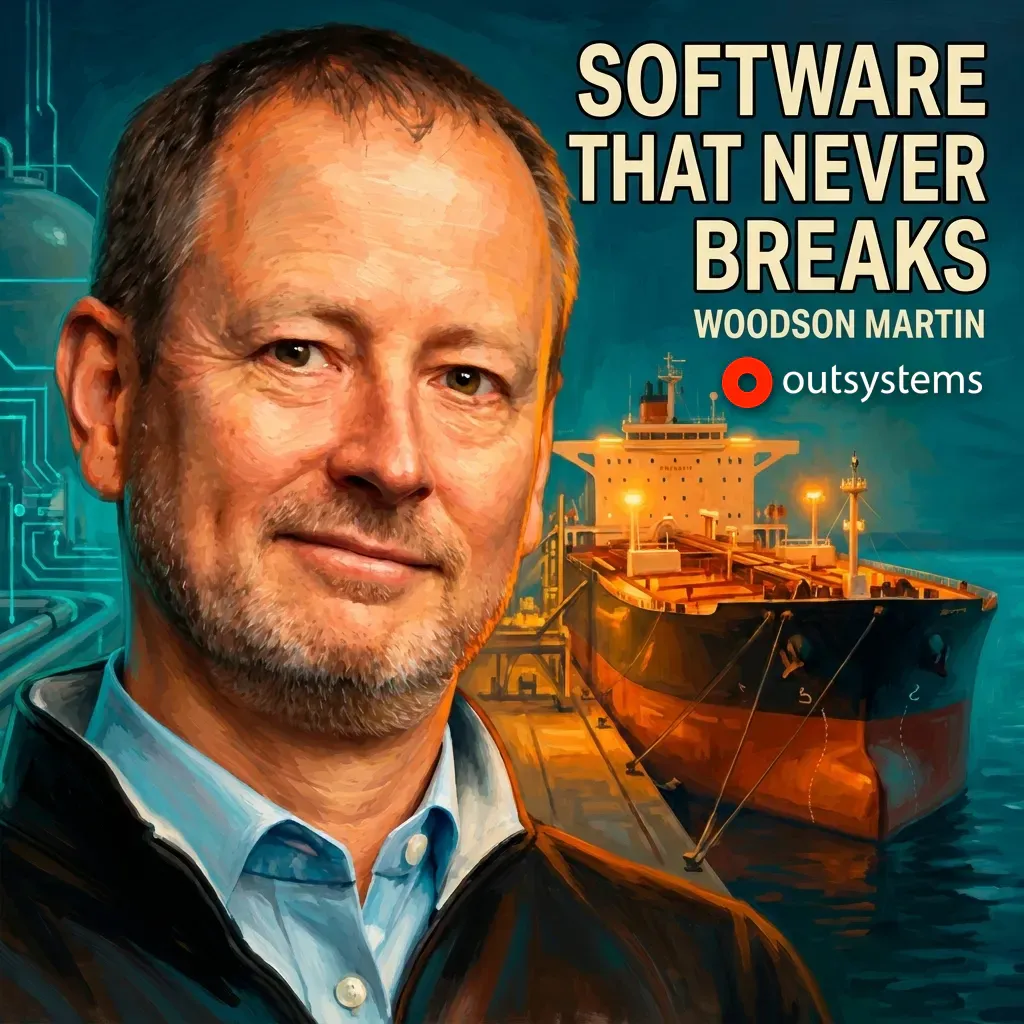
OutSystems has made Agent Experience generally available, letting outside coding agents such as Claude Code and Cursor edit an abstract application model that its platform turns deterministically into governed code. CEO Woodson Martin ties the approach to faster releases and lower token bills.
 AT Pulse research deskOctober 9, 2026 · 5 min read · AI-assisted analysis
Under the OutSystems design, coding agents do not edit raw code. They change an abstract model of what the application is meant to do, and the platform then generates the code deterministically. Access controls and compliance rules are built into every generated asset, and existing components are reused. Agent Experience now offers this to Claude Code, Cursor, Codex and Kiro, and apps can be deployed to cloud, on-premises or hybrid environments. [1] [6] [7] [8]
Martin credits AI coding agents with raising OutSystems' major feature releases from 4 in Q4 2025 to 19 in Q1 2026 and 26 in Q2. These are the company's own counts. Its Q2 blog lists 27 updates for the same quarter, which uses a different definition. [1] [5]
Martin says OutSystems' token spend peaked in June and July. It is now below the Q3 forecast because the company built an internal harness and an LLM gateway that sends routine jobs to cheaper models. He argues that most enterprise workloads can run on older or open-weight models, or on plain deterministic code. Other companies have also hit budget limits: Uber capped spending on agentic coding tools at $1,500 per employee per month after using up its annual AI budget in four months. [1] [4]
Adoption is still slowed by governance and by unclear returns. Martin describes finished agentic systems that sit waiting for approval of the model they use, including questions about whether its training data was legally acquired. He also says productivity gains take time to show up in profit and loss, and that some AI investments will not pay off. [1] [4]
The evidence is a general-availability release plus an executive's account of cutting AI costs with a custom harness and model routing.
Read the full assessment
The likely implication is that enterprises facing sprawling agent-built code and rising token bills will weigh governed platforms against vendor lock-in.
Executive brief
OutSystems CEO Woodson Martin says the company went from 4 major feature releases in Q4 2025 to 19 in Q1 2026 and 26 in Q2, and credits AI coding agents for the jump (episode, 27:32). Its token spend then peaked in June–July and fell below forecast once it built its own harness and model router. OutSystems' argument is that coding agents should edit an abstract model of the application, not raw code. The platform then generates the code deterministically. The day after the episode aired, OutSystems made this design generally available as "Agent Experience" for Claude Code, Cursor, Codex and Kiro.
What changed and event timeline
New CEO
OutSystems named Woodson Martin, formerly of Salesforce, as CEO and said it had passed €500M in revenue.
Agentic Systems Engineering
OutSystems announced a next-generation Mentor and an "Enterprise Context Graph," and said Claude Code, Codex and Cursor could all work under the same governance. Early access was planned for Q2 ().
Token bills hit budgets
Uber capped spending on agentic coding tools at $1,500 per employee per month after using up its annual AI budget in four months ().
Q2 release roundup
OutSystems listed 27 Q2 updates, including Agent Experience for ODC in early access, agent evaluations, guardrails and an MCP client ().
Podcast published
In the Cognitive Revolution episode, Martin lays out the "never breaks" thesis, how the company cut its token costs, and its new "agent foundry" ().
Agent Experience goes GA
OutSystems announced general availability at its World Tour event in Las Vegas, with support for Claude Code, Cursor, Codex and Kiro (;).
Capabilities and access
- Agent Experience (GA): outside coding agents work at the system-design level, and OutSystems generates the code.
- MCP servers: generally available on every ODC tenant. For OutSystems 11 apps, agents can read code and propose changes, which go through Compare-and-Merge (O11 MCP).
- Mentor: OutSystems' own builder assistant, also offered as MCP services.
Read the full section
- Agent Experience (GA): outside coding agents work at the system-design level, and OutSystems generates the code. Apps can run in public cloud, private cloud, on-premises or hybrid setups (ITdaily).
- MCP servers: generally available on every ODC tenant. For OutSystems 11 apps, agents can read code and propose changes, which go through Compare-and-Merge (O11 MCP).
- Mentor: OutSystems' own builder assistant, also offered as MCP services. Martin says it runs on several back-end models that OutSystems picked and fine-tuned, which he did not name (episode, 31:32).
- Agent foundry: for now only OutSystems' customer success teams use it. It reads app telemetry, suggests agents to build and estimates the ROI (episode, 51:34).
Technical analysis for researchers and developers
- Architecture: agents change an abstract "intent" model, and the platform generates the code deterministically.
- Cost engineering: OutSystems uses an internal harness plus an LLM gateway that sends routine jobs to cheaper models.
- Evaluation: OutSystems advertises golden-dataset agent evaluations and runtime guardrails (Q2 blog). No benchmark methodology or reproducible results have been published.
Read the full section
- Architecture: agents change an abstract "intent" model, and the platform generates the code deterministically. Access control, compliance and reuse of existing components are built into every generated asset (episode, 08:13). This makes the generated code more predictable but ties it to the platform.
- Cost engineering: OutSystems uses an internal harness plus an LLM gateway that sends routine jobs to cheaper models. Martin did not give the routing rules or quality metrics.
- Evaluation: OutSystems advertises golden-dataset agent evaluations and runtime guardrails (Q2 blog). No benchmark methodology or reproducible results have been published.
Claims and evidence
- Release count: Martin said 26 major features shipped in Q2 (27:32). The company blog counts 27 "updates" (blog).
- Rework rate: the GA release cites unnamed "developer survey data" saying 74% of AI-generated code needs heavy rework or never ships (Techzine).
- Customer results: all three come from the vendor's launch material (Techzine):
Read the full section
- Release count: Martin said 26 major features shipped in Q2 (27:32). The company blog counts 27 "updates" (blog). The two definitions differ, and no outside source confirms either number.
- Rework rate: the GA release cites unnamed "developer survey data" saying 74% of AI-generated code needs heavy rework or never ships (Techzine). The survey itself is not identified.
- Customer results: all three come from the vendor's launch material (Techzine):
- YESCO: two-week release cycles.
- Lowenstein Sandler: a production-ready app in under three hours.
- Normal: one app took two weeks instead of six.
- Corporate AI pullbacks: Martin named Microsoft, Meta and Uber as companies that scaled back AI use. Of these, only Uber is documented in the reviewed reporting (TechCrunch).
Context and prior work
OutSystems has offered low-code development since 2001. Martin says it started applying machine learning to the development lifecycle in 2018, before generative AI (51:34). Mentor was first sold as an application-generation "digital worker" (PR Newswire). The 2026 shift is from a closed, visual editor to open MCP and A2A interfaces that outside agents can use.
Limitations, safety and contested findings
- Compliance backlogs: Martin says some finished agentic systems sit waiting for approval of the model they use, including questions about whether its training data was legally acquired (15:00).
- Insurance: he says OutSystems' customers are not yet using AI-agent insurance.
- Measuring payoff: he concedes that productivity gains take time to show up in profit and loss, and that some AI investments will not pay off (46:04).
Read the full section
- Compliance backlogs: Martin says some finished agentic systems sit waiting for approval of the model they use, including questions about whether its training data was legally acquired (15:00).
- Insurance: he says OutSystems' customers are not yet using AI-agent insurance.
- Measuring payoff: he concedes that productivity gains take time to show up in profit and loss, and that some AI investments will not pay off (46:04). Uber's COO made a similar point, saying it is hard to tie AI usage to productivity (TechCrunch).
Business and practitioner implications
- Model choice: Martin argues most enterprise workloads don't need frontier models.
- Security patching: he argues that shared platform components let a vulnerability be fixed once across many apps, which is faster than patching many separate AI-built stacks (23:11).
- Legacy modernization: Martin says AI is making long-shelved COBOL, AS/400 and Lotus Notes migrations feasible, with one insurer planning six months instead of six years (43:02).
Read the full section
- Model choice: Martin argues most enterprise workloads don't need frontier models. Older models, open-weight models or plain deterministic code often work, so being able to swap models matters (27:32).
- Security patching: he argues that shared platform components let a vulnerability be fixed once across many apps, which is faster than patching many separate AI-built stacks (23:11).
- Legacy modernization: Martin says AI is making long-shelved COBOL, AS/400 and Lotus Notes migrations feasible, with one insurer planning six months instead of six years (43:02).
- Differentiation: he expects platforms to compete on specialization in regulated industries rather than on generic agent tooling.
The source trail.
Sources (10)
Software That Never Breaks: OutSystems CEO Woodson Martin on Building Enterprise-Grade Apps at ...
Transcript retrieved via published_transcript; language en. Timestamped text, not direct audiovisual review. Source: https://cognitiverevolution.ai/software-that-never-breaks-outsystems-ceo-woodson-martin-on-building-enterprise-grade-apps-at-ai-speed. Automatic captions/transcription may contain errors.
cognitiverevolution.ai