
BusinessMarkets, money & strategy
TP-sponsored MIT Technology Review piece says machine learning has won the forecasting debate, but independent benchmarks find no single approach wins
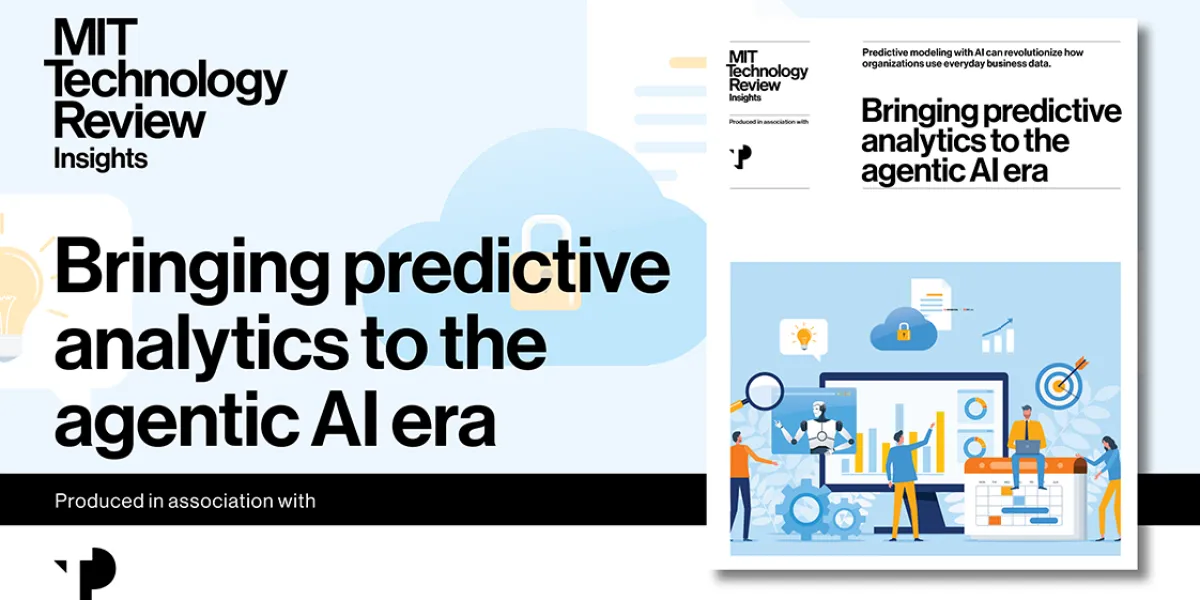
An MIT Technology Review Insights article sponsored by TP says machine learning has won the forecasting debate and AI is shifting toward autonomous decisions. Independent benchmarks show combined and routed approaches often beat relying on any single model class.
 AT Pulse research deskOctober 7, 2026 · 5 min read · AI-assisted analysis
The sponsored article says the debate over machine learning versus statistical forecasting is over, but it names no model or product and reports no data. In the M4 competition, pure machine-learning methods lost to simple statistical combinations, and hybrid methods performed best. On GIFT-Eval, no foundation model, including Chronos, TimesFM and Moirai, won across all domains. [1] [3] [4]
Recent work favors matching each series to the right model over relying on one universal model. A preprint finds foundation models do well on periodic and cold-start series, while supervised models keep an edge on physically constrained systems. In that study, routing each series by type improved accuracy and lowered inference cost. This fits M4's finding that ensembles beat single methods. [8] [3]
The article's main point is a framing claim: predictive systems are moving from producing forecasts to acting on them. Practitioners agree that turning forecasts into decisions is the harder problem. Gartner, however, expects more than 40% of agentic AI projects to be cancelled by the end of 2027 because of cost, unclear value or weak risk controls. It also warns that many vendors are relabeling existing tools as agents. [1] [7] [5] [6]
M4 and GIFT-Eval show no single forecasting approach dominates, and Gartner forecasts heavy agentic-project cancellations.
Read the full assessment
Implication: teams should benchmark against statistical baselines and require clear ROI and risk controls before letting forecasts trigger autonomous actions.
Executive brief
The core premise of this piece is one the evidence does not support. MIT Technology Review's sponsored article says the debate over whether predictive models beat statistical forecasts "is settled." Independent forecasting research disagrees. In the M4 competition, pure machine-learning methods lost to simple statistical benchmarks, and hybrid methods won (Makridakis et al.). Benchmarks of newer foundation models find that none wins across all domains (GIFT-Eval). The article was written by MIT Technology Review Insights, the custom-content arm, with sponsor TP. It names no product and reports no data. Its real point is a framing claim: AI is moving from making predictions to making decisions on its own.
What changed and event timeline
M4 results published
In a test on 100,000 time series, 12 of the 17 most accurate methods were combinations of mostly statistical approaches. None of the six pure ML methods beat the combination benchmark ().
GIFT-Eval benchmark released
Salesforce researchers released a benchmark of 23 datasets with 144,000 series, a pretraining set designed to avoid leakage, and 17 baselines, including Chronos, TimesFM and Moirai ().
Gartner warns on agentic AI
Gartner predicts more than 40% of agentic AI projects will be cancelled by the end of 2027 because of cost, unclear value or weak risk controls (;).
Practitioner column on prediction versus decision
Naveen Kolli argues the hard part is acting on forecasts, not making them. He proposes a five-layer agent framework running from perception through prediction and prescription to action ().
Study of operational viability
Researchers find foundation models do well on periodic data and cold-start cases, while supervised models keep an edge on physically constrained systems. They propose a "Complexity Router" that sends each series to the most suitable model type ().
TP-sponsored report
The sponsored piece frames autonomous decision-making as the new frontier and quotes Everest Group's Vishal Gupta ().
Capabilities and access
- The article names no model, version, product or benchmark (MIT Technology Review).
- It describes three general capabilities: real-time or continuous training instead of quarterly refreshes, use of unstructured data alongside numerical records, and predictive systems acting on their own conclusions.
- The full report sits behind a sponsor-linked download. The article page carries no figures.
Read the full section
- The article names no model, version, product or benchmark (MIT Technology Review).
- It describes three general capabilities: real-time or continuous training instead of quarterly refreshes, use of unstructured data alongside numerical records, and predictive systems acting on their own conclusions.
- The full report sits behind a sponsor-linked download. The article page carries no figures.
- Openly available forecasting foundation models such as Chronos, TimesFM and Moirai are measured on the public GIFT-Eval leaderboard (arXiv).
Technical analysis for researchers and developers
- Evaluation: GIFT-Eval scores point forecasts with MAPE and probabilistic forecasts with CRPS, both relative to a seasonal-naive baseline.
- Architecture: Chronos and TimesFM are univariate, decoder-only forecasters (GIFT-Eval).
- Implementation: sending each series to the right model class gave higher accuracy and lower inference cost than running one universal foundation model on everything (Soni et al.).
Read the full section
- Evaluation: GIFT-Eval scores point forecasts with MAPE and probabilistic forecasts with CRPS, both relative to a seasonal-naive baseline. It ships a pretraining corpus of about 230 billion points kept separate from the test data, which matters when testing zero-shot claims (arXiv).
- Architecture: Chronos and TimesFM are univariate, decoder-only forecasters (GIFT-Eval).
- Implementation: sending each series to the right model class gave higher accuracy and lower inference cost than running one universal foundation model on everything (Soni et al.). M4 points the same way: hybrids and ensembles beat any single method (M4).
- The sponsored piece documents no method for "real-time training" or for keeping systems aligned with business intent.
Claims and evidence
The reviewed sources contain no independent confirmation of the report's own findings.
Read the full section
| Claim | Status |
| The ML-versus-statistics debate is "settled" | Sponsor-content assertion. Contested by M4 and GIFT-Eval |
| "Analytics is giving way to AI" | Analyst opinion from Gupta (MIT Technology Review) |
| More than 40% of agentic projects cancelled by 2027 | Analyst forecast (Outlook Business) |
| 35% fewer stockouts, 25% lower default risk | Author-reported, no method given (CIO) |
| Routing models beats one universal model | Independent preprint, not peer-reviewed (arXiv) |
The reviewed sources contain no independent confirmation of the report's own findings.
Context and prior work
The M competitions have tested forecasting methods for more than 45 years. M4 showed machine learning helps when it is combined with statistical methods, not when it replaces them (M4). Time-series foundation models opened a new line of work on zero-shot forecasting, which GIFT-Eval was built to standardize (arXiv).
Read the full section
The M competitions have tested forecasting methods for more than 45 years. M4 showed machine learning helps when it is combined with statistical methods, not when it replaces them (M4). Time-series foundation models opened a new line of work on zero-shot forecasting, which GIFT-Eval was built to standardize (arXiv). The move from prediction to prescription, meaning from forecasting outcomes to recommending actions, is a long-standing analytics idea. Practitioners now describe it in terms of agents (CIO).
Limitations, safety and contested findings
- The source is sponsored content from MIT Technology Review Insights, not the magazine's editorial staff (MIT Technology Review).
- Gartner reports "agent washing": vendors rebranding chatbots and automation tools as agents.
- Foundation models perform worse in physically constrained and high-entropy domains (arXiv).
Read the full section
- The source is sponsored content from MIT Technology Review Insights, not the magazine's editorial staff (MIT Technology Review).
- Gartner reports "agent washing": vendors rebranding chatbots and automation tools as agents. It estimates only about 130 of thousands of agentic AI vendors are genuine, and says current models lack the maturity to pursue complex goals autonomously (Outlook Business).
- Foundation models perform worse in physically constrained and high-entropy domains (arXiv).
Business and practitioner implications
- Treat claims that ML forecasting is "settled" as marketing. Benchmark against seasonal-naive and statistical ensembles before deploying (M4).
- Routing each series by type can cut inference cost compared with one universal model (arXiv).
- Fund agentic decision layers only where ROI and risk controls are clear.
Read the full section
- Treat claims that ML forecasting is "settled" as marketing. Benchmark against seasonal-naive and statistical ensembles before deploying (M4).
- Routing each series by type can cut inference cost compared with one universal model (arXiv).
- Fund agentic decision layers only where ROI and risk controls are clear. Gartner forecasts AI will make 15% of day-to-day business decisions by 2028, but also expects high cancellation rates (Outlook Business).
- Close the gap between data-science and operations teams so forecasts actually feed decisions (CIO).
Sources
Read the full section
- Bringing predictive analytics to the agentic AI era – MIT Technology Review Insights
- The M4 Competition: Results, findings, conclusion and way forward
- GIFT-Eval: A Benchmark For General Time Series Forecasting Model Evaluation
- Assessing the Operational Viability of Foundation Models for Time Series Forecasting
- Over 40% of Agentic AI Projects Will Be Scrapped by 2027, Says Gartner – Outlook Business
- Gartner press release
- Predicting the future is easy; deciding what to do is the hard part – CIO
The source trail.
Sources (9)
Bringing predictive analytics to the agentic AI era
Article text retrieved; extracted text may omit tables or interactive elements.
technologyreview.com