
EcosystemsRegions, accelerators & hubs
Y Combinator open-sources QM, the self-hosted AI agent harness it uses to run internal work
Y Combinator has released QM, the agent harness behind much of its internal work, as free MIT-licensed software. Companies host it themselves, use it through Slack and the web, and connect it to any model provider. An independent security review urges caution.
From the Y Combinator video of November 28, 2026 and cited sources: QM is a self-hosted agent "coworker" built on Node and Postgres. [1] [2] [3]
SOURCES[1] We Built An AI Coworker At YC That You Can Use For Free youtube.com[2] Y Combinator Open-Sources QM (Startup Fortune) startupfortune.com[3] yc-software/qm (GitHub) github.com
 AT Pulse research deskPublished · Updated · 5 min read · AI-assisted analysis
AI-assisted, not human-edited. Methodology Corrections Who owns this site
- Original source
- Y Combinator video, independent perspective
- Brief by
- AT Pulse research desk AI-assisted; publisher and contact on the desk page
- When
- November 28, 2026 video published
- Covered
- Nov 29 edition
- Evidence
- 6 sources across 6 sites; transcript sourced
- 1We Built An AI Coworker At YC That You Can Use For Freeyoutube.com
- 2Y Combinator Open-Sources QM (Startup Fortune)startupfortune.com
- 3yc-software/qm (GitHub)github.com
- 4YC QM Agent Review (Wavect)wavect.io
- 5YC Open-Sourced Its Agent Harness. Send Prose, Not Code.…aibacon.net
- 6QM Explained (MindStudio)mindstudio.ai
RisingHow it’s measured
YouTube video · 57.8K views · 777 likes
Reach blends public engagement (views, likes, comments, shares, stars) from the platforms where the story or its original source lives: YouTube, Hacker News, GitHub, Substack and similar. A video and the article written from its transcript share one score, taken from the video. Platforms with no data are left out rather than counted as zero, and the age of a story never lowers its score.
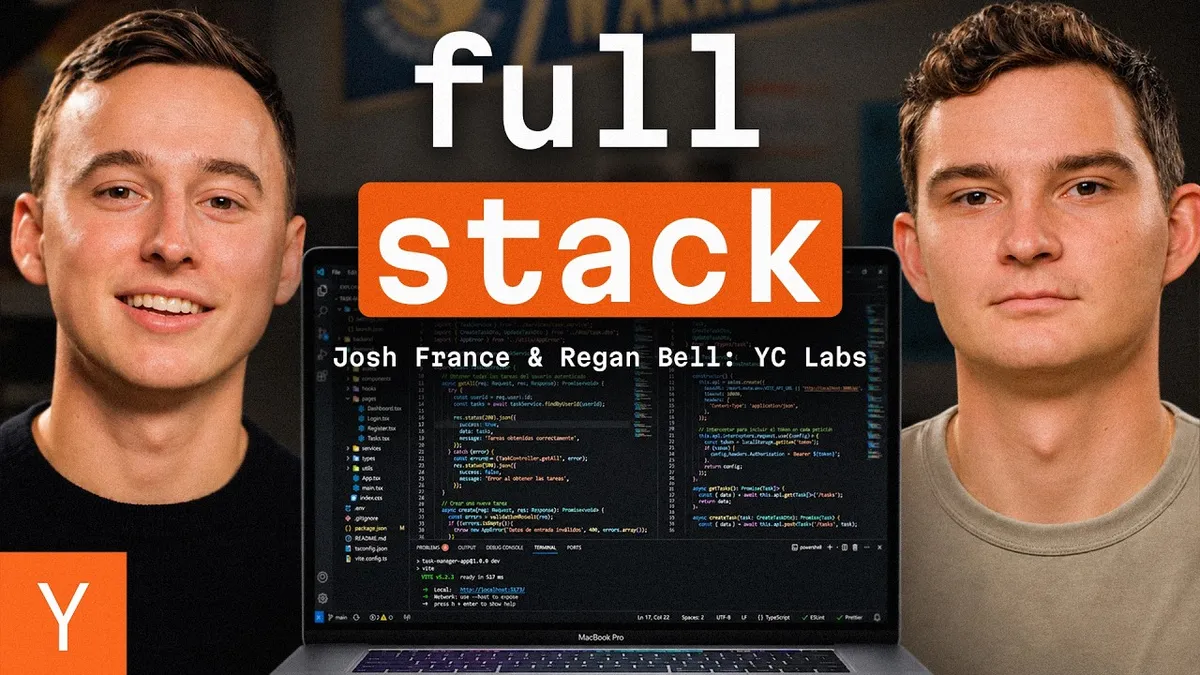
QM is a self-hosted agent "coworker" built on Node and Postgres. It is meant for a whole organization: each person gets a private sandboxed scope, and shared projects let teammates see each other's work. It can run models from Anthropic, Google or open-weight providers, and it lets staff build small internal apps that connect to production data and Gmail. [1] [2] [3]
A "grind" setting makes the agent keep working for a minimum time instead of stopping early. In one demo run on a repo-cleanup task, it produced a 700-line diff compared with 180 lines without the setting. The presenters said the larger change still needed human review. [1]
An independent review found that QM's command policy can be bypassed, browser actions skip its egress controls, and credentials sit in plaintext while in use. It recommends no more than a bounded pilot. QM can also switch providers when a model refuses a request, so safety limits depend on whoever operates it. [4] [1]
The code, architecture and an independent security review are public. YC's claims about internal use and the diff comparison come from YC itself.
Read the full assessment
For teams, QM means owning agent data and model choice, but also taking on security, secrets management and operations.
Executive brief
Y Combinator now runs a large share of its own internal work on QM ("Quartermaster"), an agent harness its Labs team built and released under the MIT license with no paid tier and no hosted service (Startup Fortune). One detail stands out: the repo does not accept code from outside contributors. In a video published November 28, YC engineers Josh and Reagan show QM working as a Slack "coworker" that can move between model providers (video). An independent security review recommends no more than a bounded pilot (Wavect).
Read the full section
Y Combinator now runs a large share of its own internal work on QM ("Quartermaster"), an agent harness its Labs team built and released under the MIT license with no paid tier and no hosted service (Startup Fortune). One detail stands out: the repo does not accept code from outside contributors. People submit plain-prose proposals instead (GitHub). In a video published November 28, YC engineers Josh and Reagan show QM working as a Slack "coworker" that can move between model providers (video). An independent security review recommends no more than a bounded pilot (Wavect).
What changed and event timeline
1 Aug 2026: QM open-sourced
YC releases QM under the MIT license. Sources disagree on the exact day: one reports July 31, another August 1 (;).
- Early Aug 2026
Hacker News pushback
The launch thread reached about 486 points. Some commenters called QM "not very novel" and questioned what being multiplayer adds in practice ().
Independent security review
Wavect's Kevin Riedl documents ways to get around the command policy and gaps in credential handling. He recommends a 30-day pilot at most ().
YC demo video
Josh and Reagan from YC Labs demonstrate the Slack workflow, model switching, a "grind" budget setting and internal apps ().
Capabilities and access
- Install: self-hosted from
github.com/yc-software/qm(npm package@yc-software/qm). Needs Node 24.15+ and Postgres, and deploys to AWS, Render, Fly, DigitalOcean, E2B or Superserve (GitHub). - Each person gets a private workspace ("scope"), and shared projects let a team see each other's work (video, 4:07).
- Models: not tied to one vendor. The demo mentions Anthropic models, Gemini and open-weight models (video, 4:33).
Read the full section
- Install: self-hosted from
github.com/yc-software/qm(npm package@yc-software/qm). Needs Node 24.15+ and Postgres, and deploys to AWS, Render, Fly, DigitalOcean, E2B or Superserve (GitHub). - Interfaces: Slack and the web. Each person gets a private workspace ("scope"), and shared projects let a team see each other's work (video, 4:07).
- Models: not tied to one vendor. The demo mentions Anthropic models, Gemini and open-weight models (video, 4:33). The fast model the presenters name is garbled in the auto-captions ("Astro"), so it can't be identified.
- Apps: staff build small internal web apps that read production data and send email through Gmail (video, 8:48).
Technical analysis for researchers and developers
- Architecture: a headless core handles the API, identity, policy and the agent loop (built on Pi). Postgres stores sessions, memory and task queues.
- Adapters: four interchangeable back ends sit behind one interface: Pi, OpenCode, Codex and Claude Code (AI Bacon).
- Compute floor: the "grind" setting makes the agent keep working for a minimum time, for example 30 minutes, rather than stopping when it decides it is done or stuck (video, 5:44).
Read the full section
- Architecture: a headless core handles the API, identity, policy and the agent loop (built on Pi). Postgres stores sessions, memory and task queues. Each scope gets its own sandbox with separate memory, permissions, scheduled jobs (crons) and apps (GitHub).
- Adapters: four interchangeable back ends sit behind one interface: Pi, OpenCode, Codex and Claude Code (AI Bacon).
- Compute floor: the "grind" setting makes the agent keep working for a minimum time, for example 30 minutes, rather than stopping when it decides it is done or stuck (video, 5:44).
- Master spec: a document describing the product vision and how the pieces fit, used to keep agents from making narrow patch-style fixes (video, 10:42).
- No evaluations: no benchmarks or reproducible evaluations have been published.
Claims and evidence
- Used across YC's accounting, legal, events and engineering teams (Startup Fortune). This is self-reported by YC; no outside source confirms it.
- Grind produced a 700-line diff versus 180 lines without it on a task to clean up stale items in the repo (video, 6:39).
- Popularity: the repo shows more than 16,000 stars and 2,000 forks (GitHub). That measures interest, not whether it works well.
Read the full section
- Used across YC's accounting, legal, events and engineering teams (Startup Fortune). This is self-reported by YC; no outside source confirms it.
- Grind produced a 700-line diff versus 180 lines without it on a task to clean up stale items in the repo (video, 6:39). This is one anecdotal run. The presenters say the changes still needed human review, so the larger diff is not evidence of better quality.
- Popularity: the repo shows more than 16,000 stars and 2,000 forks (GitHub). That measures interest, not whether it works well.
- Funding: QM is a free YC project. There is no round, valuation or revenue to verify.
Context and prior work
The presenters place QM in a shift from local coding agents such as Claude Code and Conductor toward always-on, team-wide agents. They credit OpenClaw (captioned "Open Cloud") as the inspiration (video, 0:36). Commentators describe QM as built for whole companies rather than as a personal assistant (MindStudio).
Limitations, safety and contested findings
- Security gaps (Wavect): the command policy can be bypassed by obfuscating commands. Browser actions skip the egress proxy that controls outbound traffic.
- Conflicting accounts of "Dangerous" mode: the README describes it as having no approval gates (GitHub).
- Routing around refusals: the demo shows QM switching away from Anthropic after it refused a "super virus" prompt.
Read the full section
- Security gaps (Wavect): the command policy can be bypassed by obfuscating commands. Browser actions skip the egress proxy that controls outbound traffic. Credentials sit in plaintext while in use. Admins can read sensitive content without extra consent. Wavect concludes QM is not a hardened multi-tenant boundary (Wavect).
- Conflicting accounts of "Dangerous" mode: the README describes it as having no approval gates (GitHub). AI Bacon says predeclared blocks on destructive commands still apply in every mode (AI Bacon).
- Routing around refusals: the demo shows QM switching away from Anthropic after it refused a "super virus" prompt. The presenters frame this as useful for security and research work (video, 4:52). That framing means QM's safety posture depends on the operator, not the model provider.
- Code quality: the presenters themselves say agents pile up short-sighted fixes that cause production bugs months later (video, 9:51).
Business and practitioner implications
- Ownership vs operations: self-hosting keeps company data and model choice in-house.
- Token spending: YC openly spends heavily on tokens.
- Where to start: Wavect suggests piloting one reversible internal workflow and measuring how often tasks are completed before expanding.
Read the full section
- Ownership vs operations: self-hosting keeps company data and model choice in-house. The cost is that the company takes on billing, identity, secrets management, upgrades and incident response (Wavect).
- Token spending: YC openly spends heavily on tokens. Its pattern is to start background jobs on the most capable model, then move them to cheaper models once it knows how much capability the task needs (video, 7:17).
- Where to start: Wavect suggests piloting one reversible internal workflow and measuring how often tasks are completed before expanding.
The source trail.
Sources (6)
We Built An AI Coworker At YC That You Can Use For Free
Transcript retrieved via youtube_auto_captions; language en. Timestamped text, not direct audiovisual review. Source: https://www.youtube.com/watch?v=2e0fJekCBxk. Automatic captions/transcription may contain errors.
www.youtube.com