
FundingRounds, leads & terms
Payroll startup Warp drops take-home coding tests and now requires AI tools in live interviews
Payroll and HR-automation startup Warp has replaced take-home coding tests with 75-minute live interviews in which candidates must use AI tools, after its COO said submissions had become nearly identical. Interviewers now grade scoping, planning and prompting alongside the code.
From the Business Insider · Startups article of November 28, 2026 and cited sources: Warp, a New York payroll and HR-automation company (not the terminal maker), stopped using take-home coding tests after COO and head of people Gabriella Garcia said candidates' results had become almost indistinguishable. [1] [2]
SOURCES[1] Business Insider: An AI startup killed its job interview… businessinsider.com[2] Jawlah: Warp cancels take-home hiring tests as AI cheating… jawlah.co
 AT Pulse research deskPublished · Updated · 5 min read · AI-assisted analysis
AI-assisted, not human-edited. Methodology Corrections Who owns this site
- What happened
- Warp, a New York payroll and HR-automation company (not the terminal maker), stopped using take-home coding tests after COO and head of people Gabriella Garcia said candidates' results had become almost indistinguishable. [1] [2]
- Original source
- Business Insider · Startups article, independent perspective
- Brief by
- AT Pulse research desk AI-assisted; publisher and contact on the desk page
- When
- November 28, 2026 article published
- Covered
- Nov 28 edition
- Evidence
- 10 sources across 10 sites
- 1Business Insider: An AI startup killed its job interview…businessinsider.com
- 2Jawlah: Warp cancels take-home hiring tests as AI cheating…jawlah.co
- 3Canva Engineering: Yes, you can use AI in our interviewscanva.dev
- 4Anthropic Engineering: Designing AI-resistant technical…anthropic.com
- 5TechCrunch: Anthropic has to keep revising its technical…techcrunch.com
- 6Dealroom: Warp lands $60M Series Bdealroom.co
Reach: not measured yet
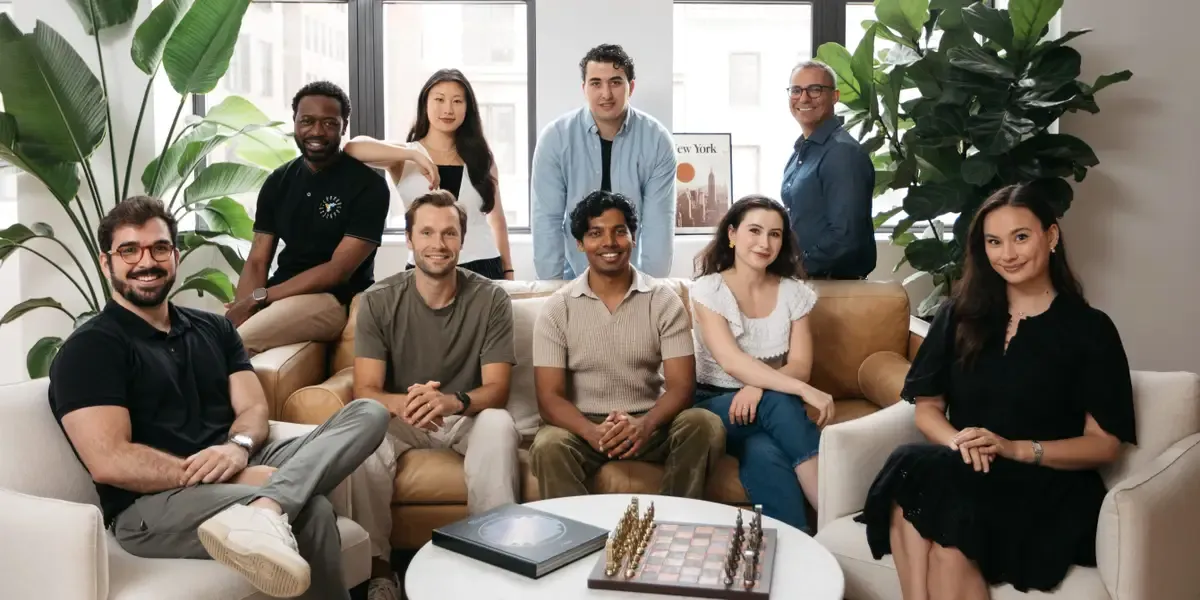
Warp, a New York payroll and HR-automation company (not the terminal maker), stopped using take-home coding tests after COO and head of people Gabriella Garcia said candidates' results had become almost indistinguishable. She attributed this to widespread cheating. It now runs 75-minute open-ended live sessions where candidates pick their own AI tools, such as Cursor or Claude Code. Interviewers grade how they scope, plan and prompt, and starting to code without a plan counts against them. [1] [2]
Warp is part of a wider shift in technical hiring. Canva replaced its fundamentals screen with an AI-assisted coding interview. Meta piloted coding tests with an AI assistant available. Anthropic took a different route: it had to rewrite its performance-engineering take-home several times as successive Claude models matched or beat strong applicants, and moved toward unusual puzzle-style problems. [3] [4] [5] [9]
Several firms, including Canva, Meta and Anthropic, have redesigned coding tests around AI.
Read the full assessment
The implication: unsupervised take-homes may no longer separate strong candidates from weak ones, pushing hiring toward costlier live formats whose predictive value has not been shown.
Sources are gathered and checked; writing the dossier now.
Executive brief
The company in this story is Warp, the New York payroll and HR-automation startup, not the Warp terminal maker. It stopped using take-home coding tests after its COO and head of people, Gabriella Garcia, said candidates' results had become almost identical. Her words: "everybody was cheating" (Business Insider). Warp now runs 75-minute live interviews where candidates are required to use AI tools such as Cursor or Claude Code. Interviewers grade how candidates scope, plan and prompt, not only the code they produce (Jawlah). Only Garcia's account supports the cheating claim. No figures on how widespread it was have been published.
What changed and event timeline
Canva requires AI in interviews
Canva replaced its computer-science fundamentals screen with an "AI-Assisted Coding" interview. Its reason was that AI assistants can trivially solve traditional interview questions ().
Anthropic says Claude beat its own take-home
Tristan Hume wrote that Claude Opus 4 and then Opus 4.5 matched or beat strong applicants on the company's performance-engineering take-home. That forced three versions of the test (;).
Warp raises a $60M Series B
Battery Ventures led the round and Sound Ventures returned as an investor. Reported total funding is $85M (;).
Warp's interview change becomes public
Business Insider reported that Warp scrapped take-homes and now requires AI use in live technical interviews ().
Capabilities and access
- Format: a live, open-ended technical exercise lasting 75 minutes. Candidates pick their own tools, with Cursor and Claude Code named (Jawlah).
- What is graded: how candidates scope the problem, design a solution, word their prompts, and plan before coding.
- Scope: the same approach reportedly covers marketing, sales and customer-service hiring (Jawlah).
Read the full section
- Format: a live, open-ended technical exercise lasting 75 minutes. Candidates pick their own tools, with Cursor and Claude Code named (Jawlah).
- What is graded: how candidates scope the problem, design a solution, word their prompts, and plan before coding. Jumping straight into code without a plan counts against a candidate, even with AI help (Jawlah).
- Scope: the same approach reportedly covers marketing, sales and customer-service hiring (Jawlah).
- No rubric, scoring scale or specific model versions have been published.
Technical analysis for researchers and developers
Read the full section
- The underlying problem: a test only works if scores spread candidates apart. Once AI tools are used on a take-home, many submissions look the same and the test stops separating stronger candidates from weaker ones. Warp's "almost identical" results describe exactly this (Jawlah).
- Two ways companies have responded:
- Watch the process live. Warp and Canva observe candidates breaking down problems and reviewing AI output (Canva).
- Make the test harder for AI. Anthropic moved to unusual, puzzle-style problems that are less likely to resemble model training data (Anthropic).
- Reproducibility: Anthropic put its original take-home on GitHub with model benchmarks (the best Claude score at launch was 1,487 cycles). Warp has published nothing comparable.
Claims and evidence
- "Everybody was cheating": this comes from a Warp executive talking about Warp's own hiring. No independent data backs it up (Business Insider).
- Funding:
- The $60M round size was announced by CEO Ayush Sharma through an Axios exclusive (Axios).
Read the full section
- "Everybody was cheating": this comes from a Warp executive talking about Warp's own hiring. No independent data backs it up (Business Insider). The Jawlah account appears to be based on the same reporting, so it is not separate confirmation.
- Funding:
- The $60M round size was announced by CEO Ayush Sharma through an Axios exclusive (Axios).
- Battery Ventures as lead and the $85M total come from Dealroom.
- Valuation was not disclosed.
- None of these figures has been confirmed by a filing.
- Growth: the claim that Warp "doubled ARR in Q1" is self-reported. It appears on the blog of investor Homebrew, which is writing about its own portfolio company.
- Anthropic's model-versus-human results come from Anthropic's own testing (Anthropic).
Context and prior work
- Meta began piloting coding interviews with an AI assistant available in 2025 (404 Media).
- Canva's pilot found that candidates with little AI experience struggled mainly to guide the AI and spot weak suggestions, not with coding itself (Canva).
- Its performance-engineering take-home explicitly allows AI (Anthropic). A third-party tracker says Anthropic's general policy bars AI unless candidates are told otherwise (TechInterview).
Read the full section
- Meta began piloting coding interviews with an AI assistant available in 2025 (404 Media).
- Canva's pilot found that candidates with little AI experience struggled mainly to guide the AI and spot weak suggestions, not with coding itself (Canva).
- Anthropic's policies conflict across sources. Its performance-engineering take-home explicitly allows AI (Anthropic). A third-party tracker says Anthropic's general policy bars AI unless candidates are told otherwise (TechInterview).
Limitations, safety and contested findings
- Cheating evidence: none has been published, and AI use was not necessarily banned on Warp's old take-home. The "cheating" label is Garcia's own description.
- Headcount figures don't match:
- One account says Warp started 2026 with 20 employees (Jawlah).
Read the full section
- Cheating evidence: none has been published, and AI use was not necessarily banned on Warp's old take-home. The "cheating" label is Garcia's own description.
- Headcount figures don't match:
- One account says Warp started 2026 with 20 employees (Jawlah).
- The June announcement described growth from 15 to more than 50 (Homebrew).
- Customer risk: Warp's customers are mostly fast-growing AI companies, which Dealroom flagged as a concentration risk (Dealroom).
- Validation: no source shows that AI-in-the-loop interviews predict job performance better than older formats.
Business and practitioner implications
- Cost: live interviews take interviewer time. Warp reportedly spends $1,500–$2,000 per candidate on in-person interviews (Jawlah).
- Hiring managers: an unsupervised take-home now mostly measures whether a candidate has access to AI tools.
- Candidates: being fluent with Cursor or Claude Code and planning out loud is becoming part of the test.
Read the full section
- Cost: live interviews take interviewer time. Warp reportedly spends $1,500–$2,000 per candidate on in-person interviews (Jawlah).
- Hiring managers: an unsupervised take-home now mostly measures whether a candidate has access to AI tools. Open-ended live tasks with clear grading on planning and review hold up better.
- Candidates: being fluent with Cursor or Claude Code and planning out loud is becoming part of the test.
- Test designers: Anthropic's experience suggests hard take-homes go stale with each model release, so they need regular re-checks against the latest models.