
MarketsAcross the markets
Bessemer Trust CEO Holly MacDonald Discusses Emerging Markets, the Dollar and Family Dynamics on Bloomberg's Masters in Business
Holly MacDonald, the former J.P. Morgan currency strategist who became Bessemer Trust's CEO in early 2026, joined Bloomberg's Masters in Business to discuss emerging markets, the dollar, the firm's growth to about $298 billion and managing conflict within wealthy families.
From the Bloomberg Markets article of November 27, 2026 and cited sources: Bessemer's 2025 annual report lists about $298 billion for roughly 3,000 client families. [3] [8]
SOURCES[3] Bessemer Trust 2025 Annual Report (PDF) bessemertrust.com[8] Bessemer Trust 2025 Annual Report page bessemertrust.com
 AT Pulse research deskPublished · Updated · 5 min read · AI-assisted analysis
AI-assisted, not human-edited. Methodology Corrections Who owns this site
- What happened
- Bessemer's 2025 annual report lists about $298 billion for roughly 3,000 client families. [3] [8]
- Original source
- Bloomberg Markets article, independent perspective
- Brief by
- AT Pulse research desk AI-assisted; publisher and contact on the desk page
- When
- November 27, 2026 article published
- Covered
- Nov 28 edition
- Evidence
- 11 sources across 7 sites
- 1Managing $300B for Ultra Wealthy Families: Masters in…bloomberg.com
- 2Managing $300 Billion for Ultra Wealthy Families: Masters…omny.fm
- 3Bessemer Trust 2025 Annual Report (PDF)bessemertrust.com
- 4Wikipedia: Bessemer Trusten.wikipedia.org
- 5private.law: Bessemer Trustwiki.private.law
- 6The Wealth Advisor: Bessemer Trust Announces Leadership…thewealthadvisor.com
Reach: not measured yet
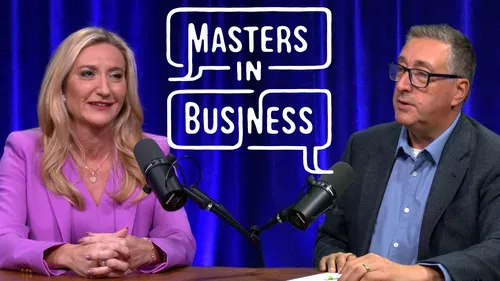
Bessemer's 2025 annual report lists about $298 billion for roughly 3,000 client families. The figure is assets under supervision and fiduciary responsibility, which is a broader measure than regulatory AUM, so it can't be compared directly with competitors' AUM figures. [3] [8]
Assets were about $200 billion when MacDonald's succession was announced in December 2024 and $298 billion at the end of 2025. The reported numbers don't show how much of that growth came from market gains and how much from net new client assets. [6] [3]
MacDonald came up through investing. She was a J.P. Morgan emerging-markets and currency strategist, then COO and CIO at Bessemer. She describes AI as a way to automate tasks so advisers can spend more time on judgment-based advice, but she has not described any specific system or measured result. [7] [9]
Henry Phipps Jr. founded the firm in 1907 to manage his Carnegie Steel fortune. It opened to other wealthy families in 1974, and the founding family is still its main owner and largest client. The firm points to client retention as a key selling point, citing 99% ten-year client-asset retention. [4] [5] [11]
The interview has no new financial disclosures, and the figures come from Bessemer's own reports. Analysts comparing wealth managers should check how assets are defined and dated.
Read the full assessment
Wealth-tech vendors may read MacDonald's view of AI as support for advisers as a hint about what she will buy.
Executive brief
A family office set up in 1907 to manage one steelmaker's fortune now oversees about $298 billion for roughly 3,000 client families, according to Bessemer Trust's 2025 Annual Report. On Bloomberg's Masters in Business, Barry Ritholtz interviewed CEO Holly MacDonald. The interview contains no new financial disclosures.
Read the full section
A family office set up in 1907 to manage one steelmaker's fortune now oversees about $298 billion for roughly 3,000 client families, according to Bessemer Trust's 2025 Annual Report. That figure is what sits behind the "$300B" in the headline. On Bloomberg's Masters in Business, Barry Ritholtz interviewed CEO Holly MacDonald. She is a former J.P. Morgan emerging-markets and currency strategist who took over in early 2026. They talked about Brazil and emerging markets, the strength of the US dollar, how the firm grew, and how it handles conflict inside wealthy families (Bloomberg). The interview contains no new financial disclosures. Its value is a first-hand view of how a CEO who came up through investing runs a growing multifamily office.
What changed and event timeline
- Context
1974: Phipps family office opens to outsiders
The Phipps family started letting other select wealthy families use Bessemer's family-office services, which gave the firm the scale to attract talent and deals (;).
Succession announced
Bessemer named CIO Holly MacDonald to succeed CEO Marc Stern, who was retiring after 21 years. Michael Marquez was named president. Coverage at the time put assets near $200 billion (;).
MacDonald becomes CEO
She joined in 2015 from J.P. Morgan, where she was a managing director in emerging markets and global currency strategy. At Bessemer she was previously COO and CIO ().
Annual report shows $298 billion
The 2025 report lists about 3,000 client families and $298 billion in assets under supervision and fiduciary responsibility (;).
CEO lays out priorities
MacDonald described three themes: alignment, purpose and clarity. She called the AI outlook balanced and said US opportunities outweigh geopolitical concerns ().
Masters in Business episode
Ritholtz and MacDonald covered emerging markets, the dollar, the firm's growth and family dynamics. The episode is also on the podcast feed (;).
Capabilities and access
- What the firm does: wealth management, investment strategy and family-office services for ultra-high-net-worth families (Milken Institute).
- Scale: about 1,200 staff, around 15,000 trusts under trusteeship and a 99% ten-year client-asset retention rate (private.law).
- The founding family is the main owner and the largest client. The firm has 22 US offices (Key facts).
Read the full section
- What the firm does: wealth management, investment strategy and family-office services for ultra-high-net-worth families (Milken Institute).
- Scale: about 1,200 staff, around 15,000 trusts under trusteeship and a 99% ten-year client-asset retention rate (private.law).
- Ownership: private. The founding family is the main owner and the largest client. The firm has 22 US offices (Key facts).
- Leadership: Chairman George D. Phipps, CEO MacDonald, President Marquez (2025 report page).
Technical analysis for researchers and developers
The reviewed sources say little about investment methods.
Read the full section
The reviewed sources say little about investment methods. Here is what is documented:
- "Assets under supervision" includes fiduciary responsibilities. It is a different measure from regulatory AUM, so headline numbers can't be compared directly with competitors' figures (2025 Annual Report).
- On AI, MacDonald frames it as automating tasks so that staff can spend more time on judgment-based advice. She does not describe any specific system, deployment or measured result (Bessemer Insights).
- The firm publishes no performance or model details that an outsider could reproduce.
Claims and evidence
- About $300 billion under supervision: firm-reported, at $298 billion (Annual Report). The firm's own key-facts page still says $250 billion.
- Retention: the firm cites 99% ten-year client-asset retention (Key facts). These are self-reported and use different definitions.
- Growth: assets were reported at roughly $200 billion when the succession was announced (The Wealth Advisor), against $298 billion at the end of 2025.
Read the full section
- About $300 billion under supervision: firm-reported, at $298 billion (Annual Report). The firm's own key-facts page still says $250 billion. No independent audit of the figure was found among the reviewed sources.
- Retention: the firm cites 99% ten-year client-asset retention (Key facts). Separately, it cites 99.5% client retention and employee retention 10 points above the industry average (Bessemer Insights). These are self-reported and use different definitions.
- Growth: assets were reported at roughly $200 billion when the succession was announced (The Wealth Advisor), against $298 billion at the end of 2025. That comparison doesn't separate market gains from net new assets.
Context and prior work
Henry Phipps Jr., a co-founder of Carnegie Steel, started Bessemer in 1907. Around 1920 its services stretched from investments to household staff and a private train (Wikipedia). Wikipedia's figure of $106 billion and 2,300 clients is out of date. MacDonald's background in currency and emerging-markets strategy explains why the interview focused on the dollar and Brazil (Bessemer bio).
Limitations, safety and contested findings
- The firm's own document is more recent.
- Timing: The Wealth Advisor suggests MacDonald took control after President Wilcox retired in March 2025. Other sources date her start as CEO to early 2026.
- Asset figures: firm pages currently show $250 billion in one place and $298 billion in another.
Read the full section
- Chairman: Wikipedia names Stuart S. Janney III. Bessemer's 2025 report names George D. Phipps. The firm's own document is more recent.
- Timing: The Wealth Advisor suggests MacDonald took control after President Wilcox retired in March 2025. Other sources date her start as CEO to early 2026.
- Asset figures: firm pages currently show $250 billion in one place and $298 billion in another.
- Episode content: what Bloomberg says the interview covers is a topic list, not a record of what was actually said.
Business and practitioner implications
- Wealth-tech vendors: a CEO who came from the investment side and talks about AI as a tool to support advisers points toward buying tools that help advisers, not ones that replace them.
- Competing firms: retention and generational continuity are Bessemer's main selling points, so client churn when wealth passes to the next generation is the measure to compare against.
- Analysts: when comparing firms, check whether figures are "assets under supervision" or regulatory AUM, and check the date.
Read the full section
- Wealth-tech vendors: a CEO who came from the investment side and talks about AI as a tool to support advisers points toward buying tools that help advisers, not ones that replace them.
- Competing firms: retention and generational continuity are Bessemer's main selling points, so client churn when wealth passes to the next generation is the measure to compare against.
- Analysts: when comparing firms, check whether figures are "assets under supervision" or regulatory AUM, and check the date.
- None of the above is investment advice.
The source trail.
Sources (11)
Managing $300B for Ultra Wealthy Families: Masters in Business with Holly MacDonald
Article text retrieved; extracted text may omit tables or interactive elements.
bloomberg.comManaging $300 Billion for Ultra Wealthy Families: Masters in Business with Holly MacDonald
Related coverage; assess separately
omny.fm