
ExitsIPOs, listings & liquidity
Elad Gil tells most AI startups to weigh selling within the next 12–18 months
Investor Elad Gil argues that many AI startups are close to their peak value and should seriously consider a sale within 12 to 18 months. He points to seed prices far ahead of revenue and to past-boom companies that refused offers, then collapsed.
From the Sourcery video of November 26, 2026 and cited sources: Gil says most companies have a 12–18-month window when they are worth the most they will ever be, and for many AI startups that window is now. [1] [2] [3] [7]
SOURCES[1] Elad Gil: Most AI Companies Should Sell Now youtube.com[2] Let's Data Science: Elad Gil Urges AI Startups to Seek Exits letsdatascience.com[3] PJFP: Elad Gil on the AI Frontier pjfp.com
 AT Pulse research deskPublished · Updated · 4 min read · AI-assisted analysis
AI-assisted, not human-edited. Methodology Corrections Who owns this site
- What happened
- Gil says most companies have a 12–18-month window when they are worth the most they will ever be, and for many AI startups that window is now. [1] [2] [3] [7]
- Original source
- Sourcery video, independent perspective
- Brief by
- AT Pulse research desk AI-assisted; publisher and contact on the desk page
- When
- November 26, 2026 video published
- Covered
- Nov 27 edition
- Evidence
- 10 sources across 10 sites; transcript sourced
- 1Elad Gil: Most AI Companies Should Sell Nowyoutube.com
- 2Let's Data Science: Elad Gil Urges AI Startups to Seek Exitsletsdatascience.com
- 3PJFP: Elad Gil on the AI Frontierpjfp.com
- 4Tech Funding News: OpenAI reportedly raises $15B at $1.25Ttechfundingnews.com
- 5SiliconANGLE: Anthropic shares shoot up 34% in debutsiliconangle.com
- 6Stocktwits: Anthropic stock jumps in Nasdaq debutstocktwits.com
RisingHow it’s measured
YouTube video · 19.8K views · 244 likes
Reach blends public engagement (views, likes, comments, shares, stars) from the platforms where the story or its original source lives: YouTube, Hacker News, GitHub, Substack and similar. A video and the article written from its transcript share one score, taken from the video. Platforms with no data are left out rather than counted as zero, and the age of a story never lowers its score.
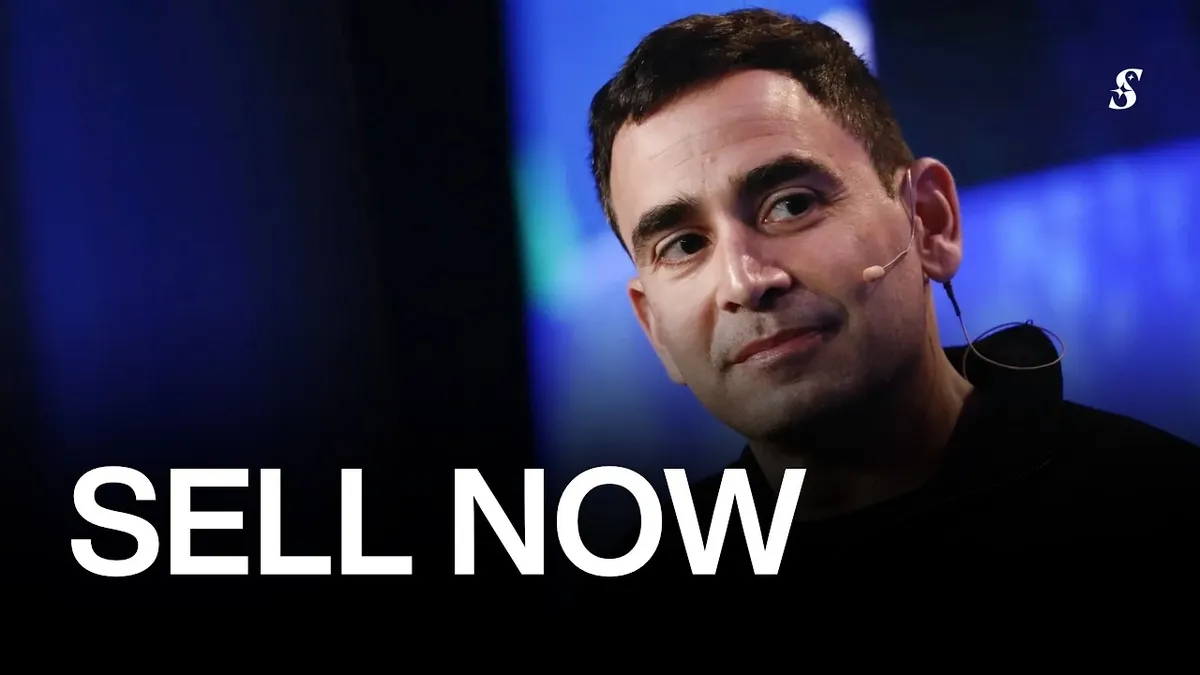
Gil says most companies have a 12–18-month window when they are worth the most they will ever be, and for many AI startups that window is now. He suggests boards discuss a possible sale every six months. He cites companies he backed in 2020–21 that turned down offers worth hundreds of millions and are now in fire sales or shutting down. He made the same argument in April 2026. [1] [2] [3] [7]
Early-stage prices have run far ahead of fundamentals. Gil describes three-person teams raising $10–20M at $100–200M valuations, sometimes with a $500M round alongside. Under his rule of thumb that software eventually trades at about 10x revenue, a $500M company would eventually need at least $50M in revenue. That is a high bar for very young firms. [1]
His signals that it may be time to sell: the price already credits years of future growth, a large incumbent enters the market, founders are burned out or fighting, or a buyer's distribution would greatly expand reach. He also warns that a smaller offer from a fast-growing acquirer can end up worth more than a bigger offer from a flat one. [1]
Anthropic's IPO priced higher than expected, while OpenAI's reported round fell short of its target. Implication: if valuations are near a peak, founders and boards holding acquisition offers may have a closing window.
Read the full assessment
Gil's figures on seed prices remain his own anecdotes.
Executive brief
Elad Gil (Gil Capital) says most AI startups should look hard at selling within the next 12–18 months, because for many of them this may be the most valuable they will ever be (video, 55:41). He said it on Molly O'Shea's Sourcery show one week after Anthropic's record Nasdaq IPO, at a time when, by his account, three-person teams raise money at $100–200M valuations. The advice itself isn't new: Gil made the same 12–18-month argument in April 2026 (Let's Data Science). Several of the companies he mentions are his own investments.
Read the full section
Elad Gil (Gil Capital) says most AI startups should look hard at selling within the next 12–18 months, because for many of them this may be the most valuable they will ever be (video, 55:41). The timing matters. He said it on Molly O'Shea's Sourcery show one week after Anthropic's record Nasdaq IPO, at a time when, by his account, three-person teams raise money at $100–200M valuations. The advice itself isn't new: Gil made the same 12–18-month argument in April 2026 (Let's Data Science). Several of the companies he mentions are his own investments.
What changed and event timeline
Gil first floats the exit window
Business Insider coverage, as summarized, says Gil urged founders to consider selling within 12–18 months. His reasons were commoditizing models, rising customer-acquisition costs and an M&A appetite that could fade ().
Same thesis on Tim Ferriss's podcast
A summary of the episode records Gil comparing today with dot-com survival rates of roughly 1–2% and naming Korean HBM memory supply as a constraint through 2028 ().
OpenAI reportedly raises at $1.25T
CNBC, citing unnamed sources, reported a $15B raise at $1.25T. That is half the original $30B target and below an earlier $1.4T goal ().
Anthropic lists as ANT
The IPO priced at $83, opened at $111.50 and closed day one at $97.17 (;).
Sourcery episode publishes
Gil repeats the 12–18-month window and suggests boards review a possible sale every six months (;).
Capabilities and access
There is no product release here; the episode is commentary. Gil credits a Claude model released "less than a year ago" with starting the agentic-coding wave, but the transcript doesn't name the version (video, 07:48). The episode is free on YouTube, and Sourcery's newsletter has a written summary (Sourcery).
Technical analysis for researchers and developers
- Closed-loop argument: Code improves fast because you can test it and feed the results straight back into the model.
- Recursive self-improvement: Gil asserts that 80–90% of the code inside the labs is now AI-generated, but he gives no source or way to measure it (video, 51:44).
- Diffusion lag: By his estimate, labs are 6–9 months ahead of the average engineer (video, 08:52).
Read the full section
- Closed-loop argument: Code improves fast because you can test it and feed the results straight back into the model. Biology and materials science still need wet-lab data, so Gil says progress there will be slower until simulation closes the loop (video, 12:02).
- Recursive self-improvement: Gil asserts that 80–90% of the code inside the labs is now AI-generated, but he gives no source or way to measure it (video, 51:44).
- Diffusion lag: By his estimate, labs are 6–9 months ahead of the average engineer (video, 08:52).
Claims and evidence
- Seed rounds at $100–200M valuations, sometimes with a $500M round raised at the same time: Gil's own anecdote. No dataset backs it (video, 13:47).
- Anthropic and OpenAI went from zero to $1T: Anthropic's value is market-confirmed through the IPO. OpenAI's $1.25T rests on unnamed sources (TFN).
- Reported figures include $81.3B plus a $26B private placement (Stocktwits) and "over $68B" (SiliconANGLE).
Read the full section
- Seed rounds at $100–200M valuations, sometimes with a $500M round raised at the same time: Gil's own anecdote. No dataset backs it (video, 13:47).
- Anthropic and OpenAI went from zero to $1T: Anthropic's value is market-confirmed through the IPO; a CNN headline puts the day-one fully diluted value at $1.76T (CNN). OpenAI's $1.25T rests on unnamed sources (TFN).
- IPO size: Outlets disagree. Reported figures include $81.3B plus a $26B private placement (Stocktwits) and "over $68B" (SiliconANGLE).
- Revenue: Anthropic's $81B October run-rate comes from the company (SiliconANGLE).
Context and prior work
- In 2025 Gil argued that some AI markets already had clear winners while others were still open (TechCrunch).
- He points to 2020–21 portfolio companies that turned down acquisition offers in the hundreds of millions and are now in fire sales or shutting down (video, 55:22).
- He cites GitLab co-founder Sid Sijbrandij's self-directed, AI-assisted cancer treatment, which Sijbrandij has documented publicly (OncoDaily; video, 38:04).
Read the full section
- In 2025 Gil argued that some AI markets already had clear winners while others were still open (TechCrunch). Here he expects oligopolies of 3–4 providers per market (video, 23:41).
- He points to 2020–21 portfolio companies that turned down acquisition offers in the hundreds of millions and are now in fire sales or shutting down (video, 55:22).
- He cites GitLab co-founder Sid Sijbrandij's self-directed, AI-assisted cancer treatment, which Sijbrandij has documented publicly (OncoDaily; video, 38:04).
Limitations, safety and contested findings
- Conflicts of interest: Gil says he backed OpenAI, Perplexity, Harvey, Character.ai, Anduril and GitLab (video, 13:18). Harvey and Brex also sponsor the episode (video, 23:51).
- Mixed signals on valuations: OpenAI's round fell short of its target (TFN), while Anthropic priced above its range.
- Unverified asides: His remarks on microplastics and mental-health diagnoses are personal opinions with no citations.
Read the full section
- Conflicts of interest: Gil says he backed OpenAI, Perplexity, Harvey, Character.ai, Anduril and GitLab (video, 13:18). Harvey and Brex also sponsor the episode (video, 23:51).
- Mixed signals on valuations: OpenAI's round fell short of its target (TFN), while Anthropic priced above its range. Read together, they don't clearly show valuations peaking or still rising.
- Unverified asides: His remarks on microplastics and mental-health diagnoses are personal opinions with no citations.
Business and practitioner implications
Gil's suggested triggers for considering a sale (video, 56:38): He also warns against picking the bigger offer from a flat acquirer over a smaller one from a fast-growing buyer (video, 58:15). At his rule of thumb of 10x revenue, a $500M company would eventually need at least $50M in revenue, a high bar for very young firms (video, 14:10).
Read the full section
Gil's suggested triggers for considering a sale (video, 56:38):
- the price already credits years of future growth
- a large incumbent enters your market
- founder burnout or co-founder conflict
- a buyer's distribution would greatly expand your reach
He also warns against picking the bigger offer from a flat acquirer over a smaller one from a fast-growing buyer (video, 58:15). At his rule of thumb of 10x revenue, a $500M company would eventually need at least $50M in revenue, a high bar for very young firms (video, 14:10).
The source trail.
Sources (10)
Elad Gil: Most AI Companies Should Sell Now
Transcript retrieved via youtube_auto_captions; language en. Timestamped text, not direct audiovisual review. Source: https://www.youtube.com/watch?v=pvcKnPGCvSg. Automatic captions/transcription may contain errors.
www.youtube.com