
FundingRounds, leads & terms
Lampsy Health raises €1.1M to launch an AI bedside lamp that detects night-time seizures
Lisbon university spin-off Lampsy Health has raised €1.1M, led by Fundação Ageas and Portugal Ventures and including EIC support, to bring to market a bedside lamp that uses an infrared camera and on-device AI to detect tonic-clonic seizures during sleep.
From the Tech.eu article of November 27, 2026 and cited sources: Fundação Ageas and Portugal Ventures led the €1.1M round, which includes European Innovation Council support. [1] [7] [4]
SOURCES[1] Tech.eu: Lampsy Health raises €1.1M tech.eu[7] Tech Funding News: Lampsy raises €1.1M techfundingnews.com[4] Técnico: spin-off secures investment (2025) tecnico.ulisboa.pt
 AT Pulse research deskPublished · Updated · 5 min read · AI-assisted analysis
AI-assisted, not human-edited. Methodology Corrections Who owns this site
- What happened
- Fundação Ageas and Portugal Ventures led the €1.1M round, which includes European Innovation Council support. [1] [7] [4]
- Original source
- Tech.eu article, independent perspective
- Brief by
- AT Pulse research desk AI-assisted; publisher and contact on the desk page
- Studies
- arXiv 2309.08794 (Sep 2023) [9] date from arXiv ID
- When
- November 27, 2026 article published
- Covered
- Nov 28 edition
- Evidence
- 10 sources across 10 sites
- 1Tech.eu: Lampsy Health raises €1.1Mtech.eu
- 2Técnico DBE: Lampsy IEEE Access paperdbe.tecnico.ulisboa.pt
- 3DN: Lampsy vigia epilepsia com IAdn.pt
- 4Técnico: spin-off secures investment (2025)tecnico.ulisboa.pt
- 5Euronews: AI-powered lamp could help detect seizureseuronews.com
- 6CORDIS: LAMP-AI project 101310739cordis.europa.eu
Reach: not measured yet
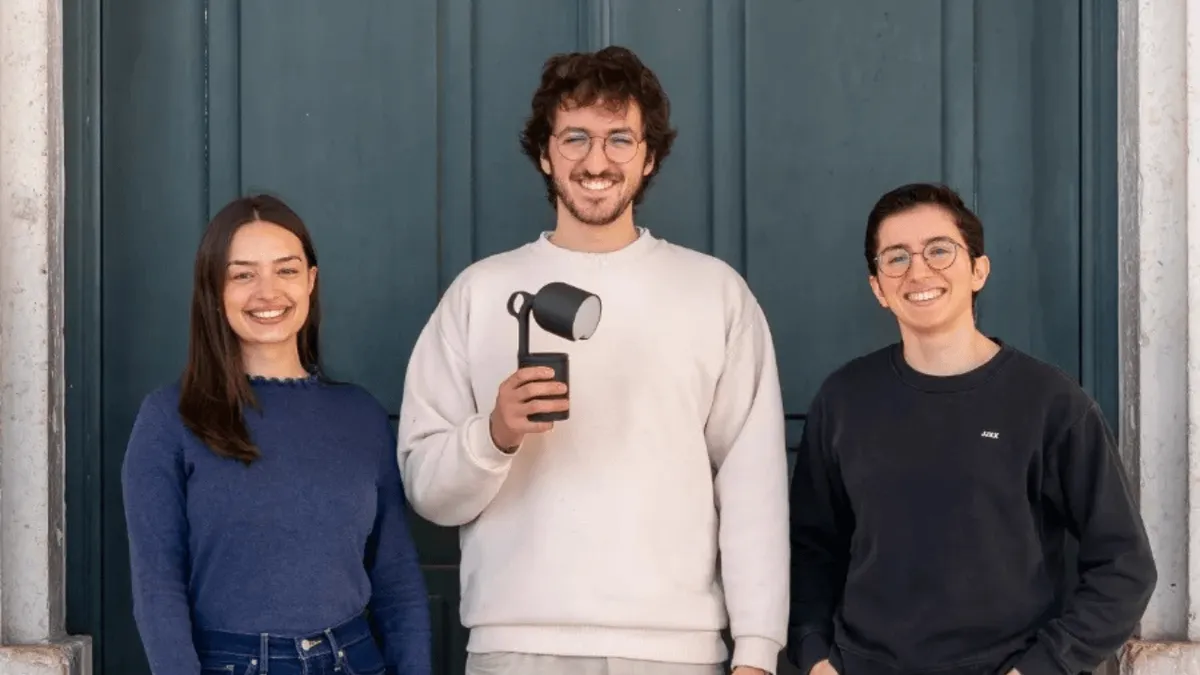
Fundação Ageas and Portugal Ventures led the €1.1M round, which includes European Innovation Council support. The valuation was not disclosed. The round follows a €230k pre-seed in April 2025, also led by the Ageas Foundation. The company had said then that it planned to raise about €1M more. [1] [7] [4]
The peer-reviewed system uses classical computer vision, not a large neural model. It extracts optical flow, separates seizure motion with PCA and ICA, and classifies with machine learning. It runs at 30 FPS on a Raspberry Pi with no per-patient calibration. The company says video stays on the device, and the lamp calls chosen contacts when it detects a seizure. [2] [1] [5]
The accuracy figure has drifted over time. The 2025 IEEE Access paper reported 99.76% sensitivity and specificity on a prototype dataset. The current company-reported figure is over 97% on 9,200 hours of hospital data. The company does not say whether 'accuracy' means sensitivity or false-alarm rate. [2] [1] [6]
a small round, partly EU-funded, backs a low-cost edge device grounded in peer-reviewed work. Implication: it could offer a home alternative to wearables, but buyers need defined sensitivity, false alarms per night and the certified class.
Executive brief
Lampsy Health, a Lisbon spin-off of Instituto Superior Técnico, has raised €1.1M to launch a bedside lamp. The lamp uses a built-in infrared camera and on-device AI to detect tonic-clonic seizures during sleep and then calls the user's chosen contacts. The headline accuracy figure is not stable. This week's announcement says "over 97%" on 9,200 hours of hospital data (Tech.eu). The team's peer-reviewed paper reported 99.76% sensitivity and specificity on a smaller prototype dataset (Técnico DBE). Launch has slipped from April 2026 to Q1 2027.
What changed and event timeline
€230k pre-seed
Ageas Foundation led, joined by angels Susana de Sousa and Ellie Asgari. The company said it was pursuing EU Class I certification by October 2025 and planned to raise about €1M more (;).
Peer-reviewed paper
IEEE Access published the "Lampsy" device paper: optical-flow detection running on a Raspberry Pi at 30 FPS, with 99.76% ± 0.35% sensitivity and specificity reported ().
April 2026 launch promised
The company claimed over 99% accuracy, 18 times fewer false alarms than alternatives, and more than 5,000 families on its waiting list ().
EIC Pre-Accelerator grant begins
The "LAMP-AI" project receives €351,356 in EU funding through June 2028. Its aims include CE marking as a Class IIa device and pilots in hospitals and homes ().
€1.1M round
The company says it has EU certification, a Q1 2027 launch date and 7,500 people on its waiting list (;).
Capabilities and access
- Hardware: a lamp with a small camera and infrared lighting. Inference runs on the device, and the system targets tonic-clonic seizures.
- Model: no public product or model version number. The EU project is called "LAMP-AI" (CORDIS).
- Privacy: the company says no video is stored or shared externally, and image capture can be turned off (Euronews).
Read the full section
- Hardware: a lamp with a small camera and infrared lighting. Inference runs on the device, and the system targets tonic-clonic seizures. On detection it auto-calls chosen contacts and sends an app alert (Tech.eu).
- Model: no public product or model version number. The EU project is called "LAMP-AI" (CORDIS).
- Privacy: the company says no video is stored or shared externally, and image capture can be turned off (Euronews).
- Access today: only medical teams at Lisbon-area public hospitals. Consumer sales in Europe and the UK are planned for Q1 2027, with the US later.
Technical analysis for researchers and developers
The published pipeline works in four steps (search-indexed abstract via Técnico DBE): The model needs no per-patient calibration and runs at 30 FPS on a Raspberry Pi. The prototype collected video during video-EEG sessions at Hospital de Santa Maria. Public summaries of the paper do not give patient counts, seizure counts or how data was split between training and testing.
Read the full section
The published pipeline works in four steps (search-indexed abstract via Técnico DBE):
- Compute optical flow from the camera feed.
- Use PCA and ICA to separate seizure movement from other motion.
- Calculate new seizure-specific metrics.
- Classify with machine learning.
The model needs no per-patient calibration and runs at 30 FPS on a Raspberry Pi. The prototype collected video during video-EEG sessions at Hospital de Santa Maria. These are classical computer-vision methods, not a large neural model, which makes edge deployment cheap. Public summaries of the paper do not give patient counts, seizure counts or how data was split between training and testing. That limits how far the 99.76% figure can be generalised.
Claims and evidence
- Round size and leads: company-announced. Valuation is undisclosed. No filing has been found.
- EIC money inside the round: the €1.1M includes EIC support (Tech.eu). That is an inference; the split has not been confirmed.
- Accuracy (97%), 9,200 hours of data, 18× fewer false alarms, waiting list: all self-reported. The only peer-reviewed figure is the 2025 paper's result.
Read the full section
- Round size and leads: company-announced. Tech.eu, Tech Funding News and FinSMEs repeat the same figures, so they confirm the announcement exists but are not independent checks. Valuation is undisclosed. No filing has been found.
- EIC money inside the round: the €1.1M includes EIC support (Tech.eu). If the full CORDIS grant were counted, it would be about a third of the total. That is an inference; the split has not been confirmed.
- Accuracy (97%), 9,200 hours of data, 18× fewer false alarms, waiting list: all self-reported. The only peer-reviewed figure is the 2025 paper's result.
Context and prior work
Most home seizure monitors are wearables or mattress sensors. Research on video-based detection, including privacy-preserving approaches, predates Lampsy (arXiv 2309.08794). Lampsy's pitch is putting video detection in a household object to avoid wearables and the stigma that comes with them. Portugal Ventures lists the company in its portfolio, with investment manager Francisco Domingues responsible for it (Portugal Ventures).
Limitations, safety and contested findings
Read the full section
- Inconsistent figures: the training-data size grew from 2,200 hours (CORDIS) to 9,200 hours. Accuracy has been stated as 99.76%, then >99%, then >97%, and "accuracy" is never defined against sensitivity or false-alarm rate.
- Certification class unclear: the company was pursuing Class I in 2025 (DN). The EU project targets Class IIa. The November 2026 announcement does not say which class was granted.
- Scope: it detects tonic-clonic seizures only. No independent validation of home use has been found.
- Delays: the launch has slipped at least twice (early 2026, then April 2026, now Q1 2027).
Business and practitioner implications
- For investors: a small round, partly made up of non-dilutive EU money, carrying a consumer launch in multiple countries.
- For buyers and clinicians: ask for sensitivity, false alarms per night and the certified device class before buying or recommending it.
- For developers: shows that classical optical-flow pipelines can run on low-cost edge hardware and keep video local, which helps with GDPR compliance.
Read the full section
- For investors: a small round, partly made up of non-dilutive EU money, carrying a consumer launch in multiple countries. Half the waiting list is in the UK, so UK market approval and distribution are central to the plan.
- For buyers and clinicians: ask for sensitivity, false alarms per night and the certified device class before buying or recommending it.
- For developers: shows that classical optical-flow pipelines can run on low-cost edge hardware and keep video local, which helps with GDPR compliance.
- Expansion plans: the company names sleep apnoea as a next target, but there is no evidence yet that the approach works for it.