
Commodities & cryptoOil, gold, dollar & digital assets
NOAA puts odds of record El Niño at about 60% as cocoa and coffee futures rise ahead of shelf prices
NOAA forecasters give roughly 60% odds that the current El Niño becomes the strongest since 1950. Cocoa and coffee futures have climbed since June, but US shelf prices have yet to follow, with the main retail impact expected in 2027.
From the The Indicator from Planet Money podcast episode of November 27, 2026 and cited sources: NOAA's Climate Prediction Center measured the Niño-3.4 index at 2.5°C above normal on November 12. [3]
SOURCES[3] elnino.news: CPC's November Discussion elnino.news
 AT Pulse research deskPublished · Updated · 4 min read · AI-assisted analysis
AI-assisted, not human-edited. Methodology Corrections Who owns this site
- What happened
- NOAA's Climate Prediction Center measured the Niño-3.4 index at 2.5°C above normal on November 12. [3]
- Original source
- The Indicator from Planet Money podcast episode, independent perspective
- Brief by
- AT Pulse research desk AI-assisted; publisher and contact on the desk page
- When
- November 27, 2026 podcast episode published
- Covered
- Nov 27 edition
- Evidence
- 10 sources across 9 sites; transcript sourced
- 1NPR: How a record El Niño is hitting your walletnpr.org
- 2Transcript: How a record El Niño is hitting your walletnpr.org
- 3elnino.news: CPC's November Discussionelnino.news
- 4Daily Maverick: From cocoa to fish, El Niño is driving…dailymaverick.co.za
- 5Grocery Dive: Grocery inflation October 2026grocerydive.com
- 6WGEM: El Niño expected to drive up the cost of coffee…wgem.com
Reach: not measured yet
NOAA's Climate Prediction Center measured the Niño-3.4 index at 2.5°C above normal on November 12. It gave about a 60% chance that the event becomes the strongest since 1950, and better than a 79% chance of a strong-to-very-strong event through January–March 2027. [3]
JPMorgan says cocoa futures are up about 40%, rice 37% and coffee 17% since El Niño was declared on June 11. These are bank estimates reported second-hand. Cocoa also hit a four-month low on November 10, as weak chocolate demand lifted ICE stocks to a 2.5-year high, even as Ivory Coast's crop is forecast to fall 21–25%. [4] [9]
US retail prices are lagging the futures market. Grocery prices rose 0.4% in October, and retail coffee fell about 3.5%. Food prices usually feel the full effect 6–12 months after an event peaks. One analysis puts the biggest inflation effect around October 2027. [5] [7] [8] [4]
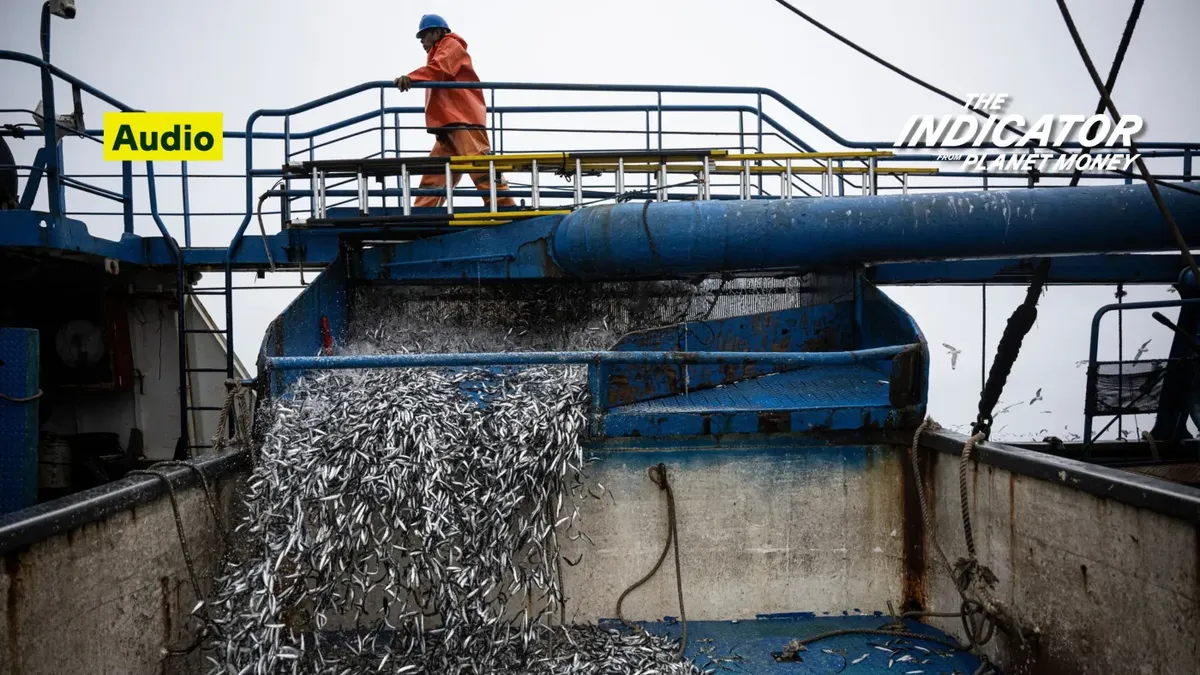
The effects reach beyond crops. Peru's anchoveta catch fell about 70% in the first half of the year, according to FAO, and South African seafood inflation reached 8.4%. Peruvian fishmeal is a supply risk that is easy to miss. [4]
futures and crop forecasts point to tighter cocoa, coffee and seafood supply, while October US data show little retail pass-through.
Read the full assessment
Implication: buyers and budget planners face a lagged cost increase, likely peaking around late 2027, if historical delays hold.
Executive brief
The forecasters' "record" label is still a forecast. NOAA's Climate Prediction Center (CPC) gave about a 60% chance on November 12 that this El Niño would become the strongest since 1950 (elnino.news). Futures markets have reacted: JPMorgan puts cocoa up 40% and coffee up 17% since El Niño was declared on June 11 (Daily Maverick). US shoppers have not seen most of it yet. Retail coffee prices fell in October (Grocery Dive). The bigger effect on shelf prices is expected in 2027.
What changed and event timeline
El Niño declared
JPMorgan uses this date as the starting point for its commodity price comparisons. Cocoa, rice, coffee and sugar are the crops it tracks as most sensitive to El Niño ().
October CPI
Overall US consumer prices rose 0.4% and grocery prices (food at home) rose 0.4%. Year-on-year comparisons were not published because no data was collected during the October 2025 government shutdown ().
CPC November update
The Niño-3.4 ocean temperature index was +2.5°C above normal. Cocoa futures rose back above $5,200 a tonne after hitting four-month lows on November 10 ().
More detail
CPC gave more than a 79% chance of a strong-to-very-strong event through January–March 2027 ().
Effects spread to seafood
Peru's anchoveta catch fell about 70% in the first half of the year (FAO figure). South African seafood inflation reached 8.4% ().
Capabilities and access
This section covers the event's measured strength and what data is available, since there is no product here.
Read the full section
This section covers the event's measured strength and what data is available, since there is no product here.
- Official status: NOAA El Niño Advisory, November 12, 2026. Niño-3, a neighbouring ocean region, was +3.6°C and Niño-1+2 was +4.4°C (elnino.news).
- Weekly readings: one tracker reported Niño-3.4 at +3.3°C for the week of November 18 (elninolive). That is a single weekly value, not the official seasonal index.
- Open data: CPC's ENSO discussions, BLS CPI tables and ICE exchange inventory figures are all free to the public.
Technical analysis for researchers and developers
- How strength is measured: El Niño strength is rated by sea-surface temperature anomalies in the Niño-3.4 region.
- Delay before prices move: retail food prices typically feel the full effect 6–12 months after the event peaks (CNN).
- Other causes in the data: US diesel averaged $6.13 a gallon, up 60% year-on-year (Grocery Dive).
Read the full section
- How strength is measured: El Niño strength is rated by sea-surface temperature anomalies in the Niño-3.4 region. "Record" here means beating every event since 1950, and CPC frames that as a probability (about 60%), not an observed fact (elnino.news).
- Delay before prices move: retail food prices typically feel the full effect 6–12 months after the event peaks (CNN). The analysis cited by Daily Maverick puts the biggest inflation effect around October 2027. It also cites ECB modelling of an overall 9% rise in global food prices (Daily Maverick).
- Other causes in the data: US diesel averaged $6.13 a gallon, up 60% year-on-year (Grocery Dive). Fuel costs make it hard to pin food price moves on weather alone.
Claims and evidence
- Futures gains since June 11 (cocoa +40%, rice +37%, coffee +17%): these are JPMorgan's figures, reported second-hand (Daily Maverick).
- Ivory Coast cocoa crop down 21–25% for 2026/27: a forecast reported by Trading Economics.
- US retail coffee down about 3.5% in October: reported by Grocery Dive. The BLS release confirms that roasted coffee prices fell (BLS).
Read the full section
- Futures gains since June 11 (cocoa +40%, rice +37%, coffee +17%): these are JPMorgan's figures, reported second-hand (Daily Maverick). Trading Economics, in contrast, had cocoa at a four-month low on November 10 (Trading Economics). The two accounts do not easily fit together.
- Ivory Coast cocoa crop down 21–25% for 2026/27: a forecast reported by Trading Economics.
- US retail coffee down about 3.5% in October: reported by Grocery Dive. The BLS release confirms that roasted coffee prices fell (BLS).
- NPR episode: the NPR transcript text in the reviewed sources contains page code rather than dialogue, so no claims from the episode are cited.
Context and prior work
- Concentrated supply: Côte d'Ivoire and Ghana grow about 60% of the world's cocoa. Brazil is the key supplier for coffee and sugar (Daily Maverick).
- Pre-existing pressure: reporting links current food prices to supply-chain strain in the Middle East and Black Sea as well as to the weather (WGEM).
Limitations, safety and contested findings
- The record is not confirmed: about a 40% chance remains that the event will not beat the 1950-onward record (elnino.news).
- Weak demand works the other way: soft chocolate demand pushed ICE cocoa stocks to a 2.5-year high of about 3.75 million bags (Trading Economics).
- Missing US data: without year-on-year CPI comparisons for October, it is hard to measure food inflation at the consumer level (BLS).
Read the full section
- The record is not confirmed: about a 40% chance remains that the event will not beat the 1950-onward record (elnino.news).
- Weak demand works the other way: soft chocolate demand pushed ICE cocoa stocks to a 2.5-year high of about 3.75 million bags (Trading Economics).
- Missing US data: without year-on-year CPI comparisons for October, it is hard to measure food inflation at the consumer level (BLS).
Business and practitioner implications
- Buyers and planners: futures prices and shelf prices are diverging right now. Reporting points to retail pass-through running into 2027 (CNN).
- Forecasting teams: CPC probabilities, crop forecasts, inventory levels and diesel prices are separate inputs and should be modelled separately.
- This dossier describes price moves and analysts' attributed views only. It is not investment guidance.
Read the full section
- Buyers and planners: futures prices and shelf prices are diverging right now. Reporting points to retail pass-through running into 2027 (CNN).
- Forecasting teams: CPC probabilities, crop forecasts, inventory levels and diesel prices are separate inputs and should be modelled separately. Seafood exposure through Peruvian fishmeal is easy to overlook (Daily Maverick).
- This dossier describes price moves and analysts' attributed views only. It is not investment guidance.
The source trail.
Sources (10)
NPR: How a record El Niño is hitting your wallet
npr.orgTranscript: How a record El Niño is hitting your wallet
published_transcript
npr.org