
Fed & ratesCentral banks & interest rates
Euro zone leaders back Pablo Hernández de Cos to succeed Christine Lagarde as ECB president
On 26 November, euro zone leaders backed Pablo Hernández de Cos, head of the Bank for International Settlements, to replace Christine Lagarde in February 2027. Two other Executive Board seats were filled in the same package, after euro area inflation hit 4% in October.
From the CNBC · Economy article of November 27, 2026 and cited sources: The European Council put forward Hernández de Cos as ECB president, along with Markus Brunnermeier and Laurence Boone for Executive Board seats. [2] [1] [6] [3]
SOURCES[2] Consilium: European Council puts forward Pablo Hernández… consilium.europa.eu[1] CNBC: Pablo Hernández de Cos set to succeed Lagarde as ECB… cnbc.com[6] NewsLooks: EU Leaders Chose Hernández de Cos newslooks.com
 AT Pulse research deskPublished · Updated · 4 min read · AI-assisted analysis
AI-assisted, not human-edited. Methodology Corrections Who owns this site
- What happened
- The European Council put forward Hernández de Cos as ECB president, along with Markus Brunnermeier and Laurence Boone for Executive Board seats. [2] [1] [6] [3]
- Original source
- CNBC · Economy article, independent perspective
- Brief by
- AT Pulse research desk AI-assisted; publisher and contact on the desk page
- When
- November 27, 2026 article published
- Covered
- Nov 27 edition
- Evidence
- 7 sources across 7 sites
- 1CNBC: Pablo Hernández de Cos set to succeed Lagarde as ECB…cnbc.com
- 2Consilium: European Council puts forward Pablo Hernández…consilium.europa.eu
- 3ECB press release, 29 Oct 2026ecb.europa.eu
- 4StockAnalysis: Eurozone inflation rises to 4.0% in Octoberstockanalysis.com
- 5Particle: EU Leaders Back Hernández de Cosparticle.news
- 6NewsLooks: EU Leaders Chose Hernández de Cosnewslooks.com
Reach: not measured yet
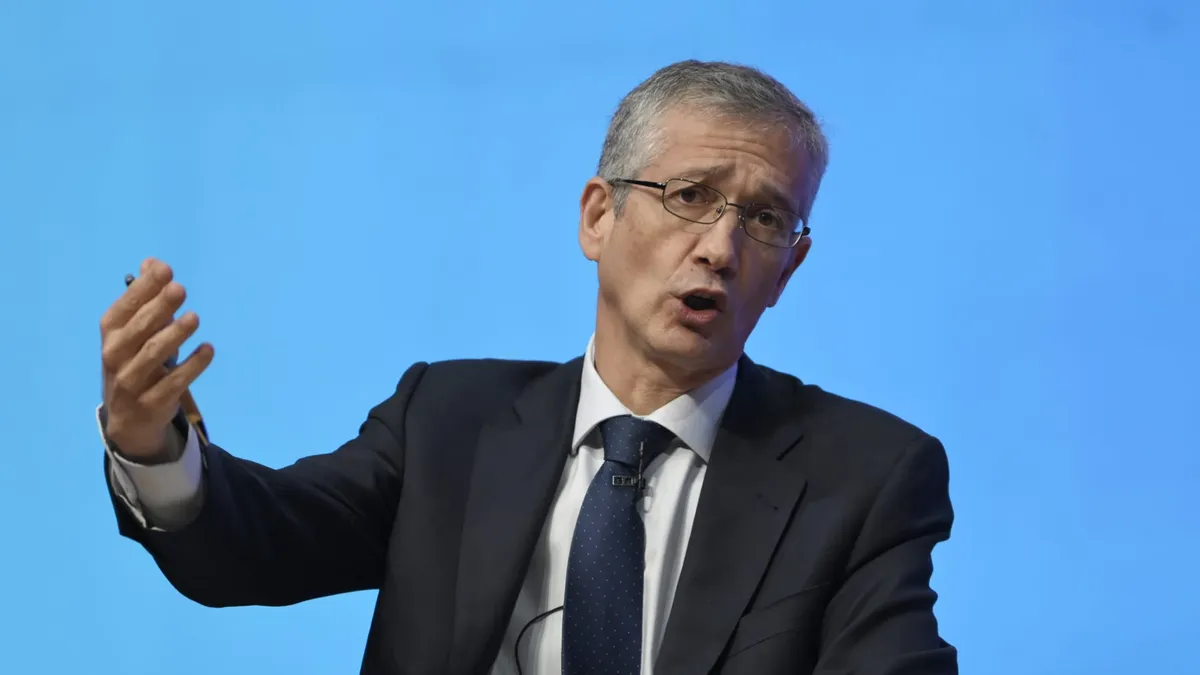
The European Council put forward Hernández de Cos as ECB president, along with Markus Brunnermeier and Laurence Boone for Executive Board seats. Reports say Brunnermeier is expected to become chief economist and Boone to take the markets portfolio. If the appointment is confirmed, he would be the first Spaniard to run the ECB. He would start an eight-year term on 7 February 2027, when Lagarde leaves about nine months early. [2] [1] [6] [3]
He was governor of the Bank of Spain from 2018 to 2024, which gave him a seat on the ECB Governing Council. He also chaired the Basel Committee from 2019 to 2024. Analysts call him moderately dovish but pragmatic. He supported both the 2019 negative rates and the 2022 rate hikes, and in 2024 described himself as an owl who follows the data. [1] [2]
He would take over with headline inflation at 4.0%, driven by energy inflation of 20.8%, while core inflation is at 2.5%. One report says the ECB may raise rates on 17 December. Wider French–German bond spreads have also raised questions about the Transmission Protection Instrument, the bond-buying backstop the ECB has never used. [4] [6] [1]
What the sources show: inflation is at 4%, energy is the main driver, and French bond spreads are wider. What may follow: a data-led president with a reported dovish tilt could face early tests on rate hikes and on whether to support French bonds.
Executive brief
Euro zone leaders backed Pablo Hernández de Cos, the former Bank of Spain governor who now runs the Bank for International Settlements, on 26 November 2026 to succeed Christine Lagarde as ECB president. If confirmed, he would be the first Spaniard to lead the ECB (Consilium). He takes over at a hard moment: euro area inflation hit 4% in October, its highest in more than three years, and French borrowing costs are under strain (CNBC). He comes as part of a package. Germany's Markus Brunnermeier and France's Laurence Boone were put forward for other Executive Board seats at the same time.
What changed and event timeline
Lagarde announces early exit
Lagarde told the Governing Council and European Council President António Costa that she will leave on 7 February 2027. Her successor will be appointed under Article 283 of the EU treaty (TFEU) ().
Inflation reaches 4%
Eurostat's flash estimate put annual inflation at 4.0%, up from 3.8% in September. Energy inflation was 20.8%, while core inflation held at 2.5% ().
- Mid Dec 2026
(expected): Formal decision
The European Parliament and the ECB Governing Council are consulted first, then the European Council ratifies ().
Capabilities and access
- Career: 55 years old. Chaired the Basel Committee on Banking Supervision from 2019 to 2024. General Manager of the BIS since July 2025 (CNBC).
- Prior ECB role: sat on the Governing Council from 2018 to 2024 (Consilium).
- Rest of the package: Brunnermeier, a Princeton economist, is expected to become chief economist, taking Philip Lane's seat.
Read the full section
- Career: 55 years old. Joined the Bank of Spain as a researcher in the 1990s and was its governor from 2018 to June 2024. Chaired the Basel Committee on Banking Supervision from 2019 to 2024. General Manager of the BIS since July 2025 (CNBC).
- Prior ECB role: sat on the Governing Council from 2018 to 2024 (Consilium).
- Rest of the package: Brunnermeier, a Princeton economist, is expected to become chief economist, taking Philip Lane's seat. Boone is reportedly in line for the markets portfolio, taking Isabel Schnabel's seat (NewsLooks; CNBC).
Technical analysis for researchers and developers
- Appointment mechanics: Under TFEU Article 283, the European Council appoints after consulting the Parliament and the Governing Council.
- Likely policy approach: Analysts describe him as moderately dovish (leaning toward lower rates) but pragmatic.
- Policy tools in focus: Wider French–German yield spreads have raised questions about liquidity operations and the never-used Transmission Protection Instrument, a bond-buying backstop against market fragmentation.
Read the full section
- Appointment mechanics: Under TFEU Article 283, the European Council appoints after consulting the Parliament and the Governing Council. Neither body has a veto (ECB; CNBC).
- Likely policy approach: Analysts describe him as moderately dovish (leaning toward lower rates) but pragmatic. He backed the 2019 negative rates and stimulus and the 2022 rate hikes, and in 2024 called himself an "owl" who follows the data (CNBC).
- Policy tools in focus: Wider French–German yield spreads have raised questions about liquidity operations and the never-used Transmission Protection Instrument, a bond-buying backstop against market fragmentation. Insiders say Board candidates' views on when to step in were a selection topic (CNBC).
Claims and evidence
- First Spaniard to lead the ECB: Consilium.
- A "carefully crafted package deal" balancing north and south, partly because Germany pushed for the chief economist post: this is an analyst's view (Christian Kopf, Union Investment), not an official account (CNBC).
- Core inflation above target through 2029: Kopf's expectation, not an official projection (CNBC).
Read the full section
- First Spaniard to lead the ECB: Consilium.
- A "carefully crafted package deal" balancing north and south, partly because Germany pushed for the chief economist post: this is an analyst's view (Christian Kopf, Union Investment), not an official account (CNBC). Particle describes a behind-the-scenes France–Germany deal (Particle).
- Core inflation above target through 2029: Kopf's expectation, not an official projection (CNBC).
- Lagarde said his qualities "will serve him well": reported by NewsLooks.
Context and prior work
Lagarde became the ECB's first woman president in 2019. De Cos and Knot were both seen as monetary-policy specialists (CNBC). Her exit about nine months early lets current leaders, including Emmanuel Macron, choose a successor before France's April 2027 presidential election (Euronews).
Read the full section
Lagarde became the ECB's first woman president in 2019. Early in her term she was criticised for lacking central-banking experience. De Cos and Knot were both seen as monetary-policy specialists (CNBC). Her exit about nine months early lets current leaders, including Emmanuel Macron, choose a successor before France's April 2027 presidential election (Euronews). Southern economies, once the "sick men" of the 2010s debt crisis, have recently outgrown a struggling Germany (CNBC).
Limitations, safety and contested findings
Read the full section
- The Dutch position is reported differently. CNBC says the Netherlands made a final push for Knot at the summit (CNBC). Particle says the Netherlands switched to back de Cos (Particle).
- Labels differ. NewsLooks calls him a "dove". Analysts quoted by CNBC call him regime-dependent (NewsLooks; CNBC).
- French intervention risk is disputed. Ken Egan of KBRA says serious talk of ECB intervention is "some way" off and that spreads have recently tightened (CNBC).
- No market data. None of the reviewed sources report euro or bond-yield moves in response to the nomination.
Business and practitioner implications
- Rates: He arrives with headline inflation at 4% and energy as the main driver (StockAnalysis).
- Technology and fintech: He inherits the digital euro and capital-markets integration. Lagarde named AI combined with cyber threats as her top worry (CNBC).
- Political calendar: Elections expected in 2027 in France, Italy, Greece, Finland and elsewhere will add uncertainty (CNBC).
Read the full section
- Rates: He arrives with headline inflation at 4% and energy as the main driver (StockAnalysis). NewsLooks reports the ECB may raise rates on 17 December (NewsLooks).
- Technology and fintech: He inherits the digital euro and capital-markets integration. The ECB's November Financial Stability Review flagged how vulnerable equity and credit markets are to AI. Lagarde named AI combined with cyber threats as her top worry (CNBC).
- Political calendar: Elections expected in 2027 in France, Italy, Greece, Finland and elsewhere will add uncertainty (CNBC).