
MacroGrowth, inflation & jobs
China's industrial profits rise 20.1% in October as electronics makers double earnings on AI chip demand
Profits at China's large industrial firms grew 20.1% year on year in October, led by electronics makers whose January–October earnings doubled on AI-driven memory-chip demand. Carmakers, building-materials and furniture producers lost ground, leaving the recovery narrow and exposed to AI spending and tariffs.
From the CNBC · Economy article of November 27, 2026 and cited sources: Electronics makers are driving China's industrial profit recovery. [1] [3] [5]
SOURCES[1] CNBC: China's factories are growing profits again cnbc.com[3] NBS: Profits, January–May 2026 stats.gov.cn[5] CGTN: Electronics drive profits (Jan–Sep) news.cgtn.com
 AT Pulse research deskPublished · Updated · 5 min read · AI-assisted analysis
AI-assisted, not human-edited. Methodology Corrections Who owns this site
- Original source
- CNBC · Economy article, independent perspective
- Brief by
- AT Pulse research desk AI-assisted; publisher and contact on the desk page
- When
- November 27, 2026 article published
- Covered
- Nov 28 edition
- Evidence
- 11 sources across 10 sites
- 1CNBC: China's factories are growing profits againcnbc.com
- 2Caixin Global: April profitscaixinglobal.com
- 3NBS: Profits, January–May 2026stats.gov.cn
- 4Trading Economics: Jan–May profitstradingeconomics.com
- 5CGTN: Electronics drive profits (Jan–Sep)news.cgtn.com
- 6CNBC: US proposes new tariffs on 14 partnerscnbc.com
Reach: not measured yet
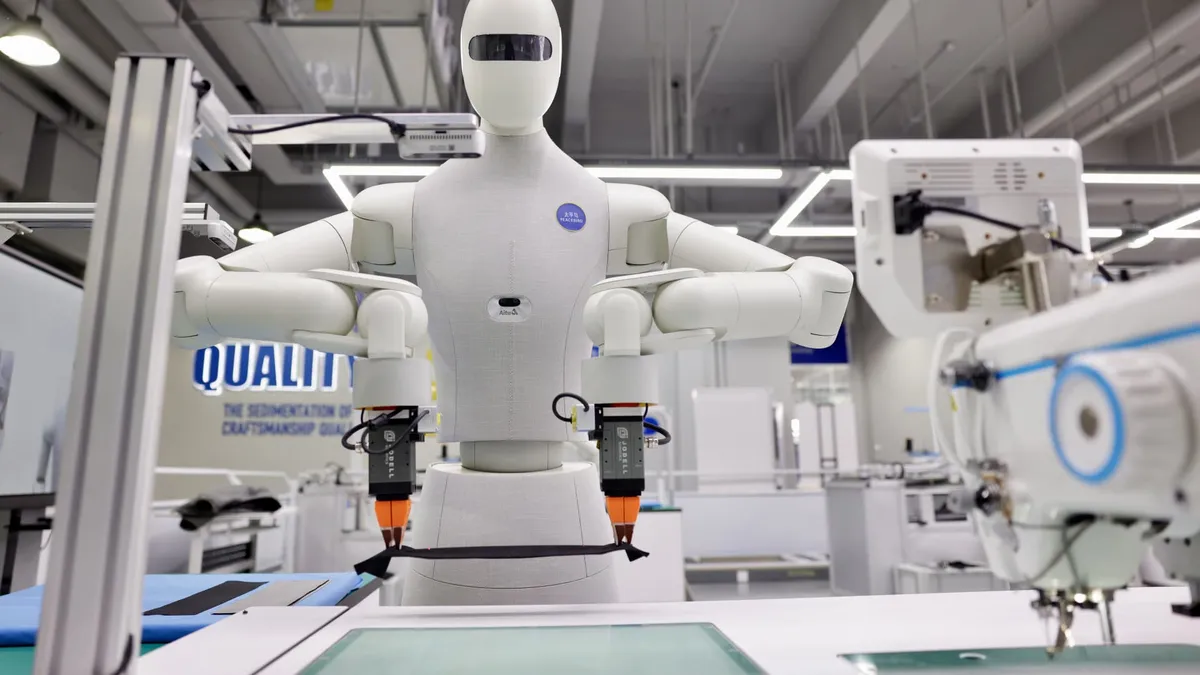
Electronics makers are driving China's industrial profit recovery. Their January–October profits doubled, and the statistics bureau credits AI demand for memory chips along with higher commodity prices. Electronics already made up 43.1% of profit growth in January–May, and high-tech manufacturing profits rose about 51% through October. [1] [3] [5]
The rebound is narrow. Automaker profits fell 26%, construction-materials producers lost 46.7% and furniture makers lost 52.4%. October retail sales grew only 0.4%. Receivables and finished-goods inventories rose faster than revenue, and economists say upstream and AI-linked sectors are pulling ahead of downstream industries. [1] [7]
AI hardware demand now accounts for much of China's industrial earnings. Economists warn that slower global AI capital spending or new US tariffs of up to 20% could weaken a recovery that domestic demand is not supporting.
Executive brief
China's electronics makers doubled their profits in January–October 2026 compared with a year earlier, and they are now the main reason the country's industrial earnings are recovering. Profits at large industrial firms rose 20.1% year on year in October, the fastest pace since May (CNBC). The gains are narrow. The National Bureau of Statistics (NBS) credits AI demand for memory chips and higher commodity prices. Automakers, construction-materials producers and furniture makers posted deeper losses. Retail sales grew only 0.4% in October. Economists warn that a slowdown in AI spending and a new US tariff proposal could weaken the export-led growth behind the rebound.
What changed and event timeline
April profits hit a 2.5-year high
Industrial profits rose 24.7% in April, the fastest since November 2023. Profits at computer and communications equipment makers more than doubled in January–April as AI demand grew ().
May growth eases to 21.1%
January–May profits reached 3.14 trillion yuan, up 18.8%. Electronics accounted for 43.1% of all profit growth (;).
September slows to 14.4%
January–September profits totalled 6.03 trillion yuan, up 15.5%. High-tech manufacturing profits rose 52% and made up 25.5% of the total ().
US proposes Section 301 tariffs
Washington proposed tariffs of up to 20% on 14 economies, citing manufacturing overcapacity. For China, the 20% would sit on top of existing duties of about 25% ().
October profits jump 20.1%
January–October growth reached 16%. Electronics profits doubled and automaker profits fell 26% (;).
Capabilities and access
This is a macroeconomic data story. No AI model is involved.
Read the full section
This is a macroeconomic data story. No AI model is involved.
- Source data: NBS monthly profit releases for "industrial enterprises above designated size," meaning firms with at least 20 million yuan in annual revenue from their main business (Business Recorder).
- Sector detail: NBS chief statistician Yu Weining reported high-tech manufacturing profits up 50.9% and spacecraft and launch-vehicle makers up 63.2% in January–October (CNBC).
- Not yet confirmed: The full January–October NBS tables did not appear in the official English press-release index.
Technical analysis for researchers and developers
- Monthly vs. year-to-date figures: NBS publishes year-to-date totals alongside the single-month rate.
- Size of the industrial base: A secondary summary puts January–October profits at 6.74 trillion yuan.
- An alternative measure: Capital Economics' China Activity Proxy, built from freight and port data instead of official statistics, rose 2.4% in October (CNBC).
Read the full section
- Monthly vs. year-to-date figures: NBS publishes year-to-date totals alongside the single-month rate. October's 20.1% is a one-month number, while the year-to-date figure moved only from 15.5% to 16% (Business Recorder).
- Size of the industrial base: A secondary summary puts January–October profits at 6.74 trillion yuan. It reports revenue up only 6.7%, which implies the gains come from wider margins rather than higher sales: margins reached 5.69%, up 0.45 points (The Edge). These figures have not been checked against the NBS tables.
- An alternative measure: Capital Economics' China Activity Proxy, built from freight and port data instead of official statistics, rose 2.4% in October (CNBC).
Claims and evidence
- Electronics profits doubled because of AI memory-chip demand. This attribution comes from the NBS itself (CNBC).
- The rebound is narrow. Economists at CITIC Bank International and ING say AI-related and upstream sectors are outpacing downstream industries (Business Recorder).
- Official GDP growth was 4.6% for the first three quarters. Capital Economics estimates 2025 growth at 3.9% and expects 2.8% next year (CNBC).
Read the full section
- Electronics profits doubled because of AI memory-chip demand. This attribution comes from the NBS itself (CNBC). A separate figure, computer and electronics profits up 100.9%, appears only in a secondary source (The Edge).
- The rebound is narrow. Economists at CITIC Bank International and ING say AI-related and upstream sectors are outpacing downstream industries (Business Recorder). The Economist Intelligence Unit's Tianchen Xu says the recovery has not yet broadened into durable profitability (CNBC).
- Growth outlooks conflict. Official GDP growth was 4.6% for the first three quarters. Capital Economics estimates 2025 growth at 3.9% and expects 2.8% next year (CNBC).
Context and prior work
- Industrial profits fell for three years, then grew only 0.6% in 2025. 2026 is on track for the strongest annual growth since 2021 (CNBC).
- An earlier report found profits in China's chipmaking sector soared in the first half of 2026 amid the AI boom (SCMP).
- In August 2026 the White House accused more than 40 economies of routing Chinese goods to the US to avoid tariffs (Al Jazeera).
Read the full section
- Industrial profits fell for three years, then grew only 0.6% in 2025. 2026 is on track for the strongest annual growth since 2021 (CNBC).
- An earlier report found profits in China's chipmaking sector soared in the first half of 2026 amid the AI boom (SCMP).
- In August 2026 the White House accused more than 40 economies of routing Chinese goods to the US to avoid tariffs (Al Jazeera).
Limitations, safety and contested findings
- Weak sectors: Profits fell 46.7% at construction-materials producers and 52.4% at furniture makers. Accounts receivable and finished-goods inventories grew faster than revenue (CNBC).
- Limited fiscal support: Local-government spending rose but "had little impact," according to Capital Economics' Leah Fahy (CNBC).
- Tariff terms differ by source:
Read the full section
- Weak sectors: Profits fell 46.7% at construction-materials producers and 52.4% at furniture makers. Accounts receivable and finished-goods inventories grew faster than revenue (CNBC).
- Limited fiscal support: Local-government spending rose but "had little impact," according to Capital Economics' Leah Fahy (CNBC).
- Tariff terms differ by source:
- One report says the investigation found a 40% tariff on China "warranted" but proposed 20% for now (Yahoo Finance).
- CNBC says the rate would rise to 40% if the truce is not extended past January (CNBC).
- US Trade Representative Jamieson Greer said the tariffs would take effect "not earlier than a couple months" from now (CNBC).
Business and practitioner implications
- AI hardware buyers: The surge in Chinese memory and electronics profits reflects strong demand and pricing for AI components.
- Supply chains: Natixis' Alicia Garcia Herrero notes that Chinese firms increasingly sell intermediate goods to other Asian countries, which then export to the US.
- Interpreting the data: Year-to-date figures, margins and receivables give a clearer picture than the single-month 20.1% headline.
Read the full section
- AI hardware buyers: The surge in Chinese memory and electronics profits reflects strong demand and pricing for AI components. Supply and costs will track global AI capital spending, which Fahy expects to slow (CNBC).
- Supply chains: Natixis' Alicia Garcia Herrero notes that Chinese firms increasingly sell intermediate goods to other Asian countries, which then export to the US. Economies that use more Chinese inputs may face higher tariff risk (CNBC).
- Interpreting the data: Year-to-date figures, margins and receivables give a clearer picture than the single-month 20.1% headline.