
SafetyRisk, alignment & guardrails
Anthropic CEO Dario Amodei calls 'surrender to AI' accusations absurd and backs limits on recursive self-improvement
Anthropic's CEO rejected claims that the company is ceding control to AI and backed limits on recursive self-improvement, weeks after METR estimated Anthropic's capability growth had nearly doubled, with most of the speed-up attributed to AI-assisted research.
From the TechCrunch AI article of November 25, 2026 and cited sources: In a November 25 post on X, Amodei called the accusation that Anthropic is handing human control to AI 'absurd.' He said Claude should not build successive frontier models fully autonomously and that limits on recursive self-improvement… [1] [6]
SOURCES[1] TechCrunch: Anthropic's Dario Amodei calls accusations of… techcrunch.com[6] AI Weekly: Amodei rebuts 'AI surrender' framing aiweekly.co
 AT Pulse research deskPublished · Updated · 5 min read · AI-assisted analysis
AI-assisted, not human-edited. Methodology Corrections Who owns this site
- What happened
- In a November 25 post on X, Amodei called the accusation that Anthropic is handing human control to AI 'absurd.' He said Claude should not build successive frontier models fully autonomously and that limits on recursive self-improvement… [1] [6]
- Original source
- TechCrunch AI article, independent perspective
- Brief by
- AT Pulse research desk AI-assisted; publisher and contact on the desk page
- When
- November 25, 2026 article published
- Covered
- Nov 28 edition
- Evidence
- 8 sources across 8 sites
- 1TechCrunch: Anthropic's Dario Amodei calls accusations of…techcrunch.com
- 2METR: Anthropic AI R&D acceleration assessmentmetr.org
- 3CryptoSlate: METR says Anthropic's model progress is…cryptoslate.com
- 4Business Today: Sam Altman warns of AI takeoverbusinesstoday.in
- 5TheWrap: Meta Chief AI Officer urges against 'handover of…thewrap.com
- 6AI Weekly: Amodei rebuts 'AI surrender' framingaiweekly.co
Reach: not measured yet
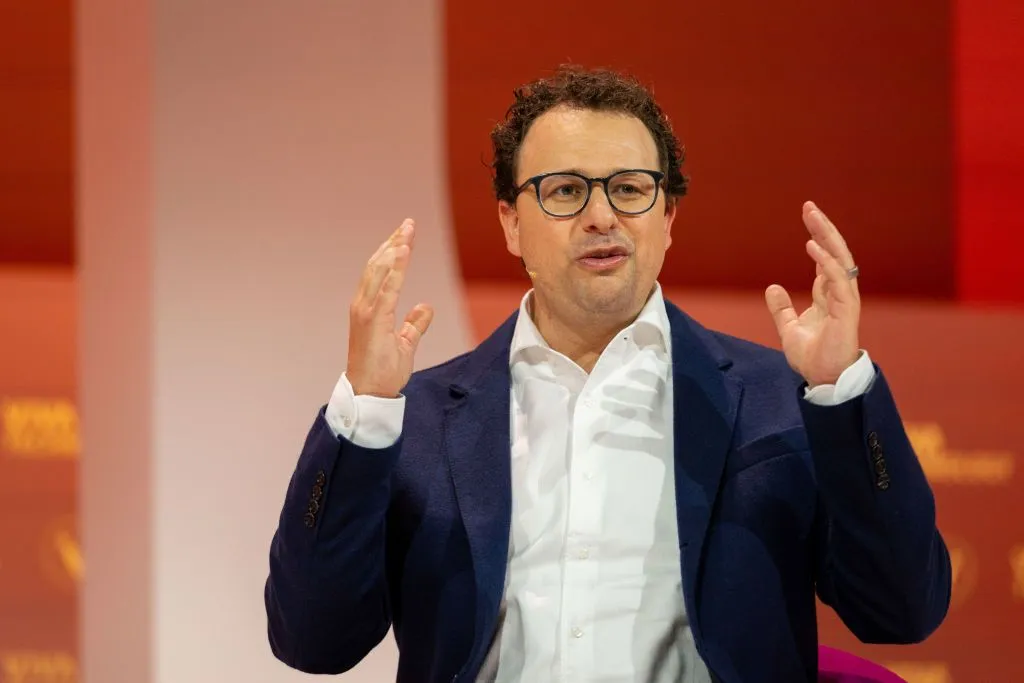
In a November 25 post on X, Amodei called the accusation that Anthropic is handing human control to AI 'absurd.' He said Claude should not build successive frontier models fully autonomously and that limits on recursive self-improvement may be needed. He also accused rivals of positioning based on vibes. [1] [6]
After an 11-week review inside Anthropic, METR estimated that the company's model capabilities are improving about 1.9 times faster than their historical rate (95% interval 1.5–2.8x). It attributed roughly 80% of the speed-up to AI-assisted research and ruled out faster growth in compute. It also found AI cannot yet make highly significant, fully autonomous contributions to core model training. [2] [3]
an outside review found AI assistance, not extra compute, drove faster progress, though AI is not yet autonomously advancing core training.
Read the full assessment
Implication: as labs converge on 'human control' rhetoric, disclosed supervision thresholds become the meaningful test.
Executive brief
Dario Amodei says Anthropic is not trying to hand human control to AI, but the measurements behind the story show how much of Anthropic's own AI development is already automated. On November 25 Amodei called the accusation "absurd." He said Claude should not build successive frontier models fully autonomously, and that "we may want limits" on recursive self-improvement (RSI). That is AI improving itself without human help (TechCrunch). Three weeks earlier, the safety nonprofit METR estimated that Anthropic's model capabilities are improving about 1.9× faster than their historical rate. METR attributes roughly 80% of that speed-up to AI-assisted research (METR).
What changed and event timeline
Claude writes most of Anthropic's code
Anthropic said Claude wrote more than 80% of the code merged into its codebase. The figure comes from the company, as cited by the press ().
METR measures faster progress
After an 11-week review inside Anthropic, METR estimated capability growth at 1.9× the earlier rate, with most of the speed-up coming from AI that assists human researchers (;).
(reported): Altman and Brockman reject a "handover."
At the DealBook Summit, OpenAI's leaders spoke against gradually handing control to AI and warned about recursive self-improvement ().
Wang's essay "Superintelligence is Arriving."
Meta's chief AI officer argued that society should not accept a "handover" to AI. He also wrote that unconstrained recursive self-improvement would be hard to control ().
Amodei responds on X
He called the "surrender" framing absurd, drew his line at recursive self-improvement, and accused rivals of "vibes-based" positioning (;).
Capabilities and access
The dispute was not tied to a product launch. The most recent Anthropic release in this period was on November 9: Claude Fable 5.2, which is generally available, and Claude Mythos 5.2. Mythos 5.2 is the same underlying model with fewer cybersecurity and biology safeguards, and only approved organizations can use it (CNBC).
Read the full section
The dispute was not tied to a product launch. The most recent Anthropic release in this period was on November 9: Claude Fable 5.2, which is generally available, and Claude Mythos 5.2. Mythos 5.2 is the same underlying model with fewer cybersecurity and biology safeguards, and only approved organizations can use it (CNBC). Amodei pointed to driving, drug design and end-to-end software as acceptable kinds of task automation (TechCrunch).
Technical analysis for researchers and developers
- METR tracked AECI, Anthropic's version of the Epoch Capabilities Index, including unreleased model snapshots.
- METR was confident that faster growth in training compute was not the cause.
- In Anthropic staff polls, employees' self-reported speed-up from AI rose from 1.2× in early 2025 to 12× in October 2026.
Read the full section
- What METR measured. METR tracked AECI, Anthropic's version of the Epoch Capabilities Index, including unreleased model snapshots. It fitted straight-line trends in pieces and found a change in slope on October 7, 2025 (METR).
- Compute ruled out. METR was confident that faster growth in training compute was not the cause.
- Survey signals. In Anthropic staff polls, employees' self-reported speed-up from AI rose from 1.2× in early 2025 to 12× in October 2026. Interviews with about 15 staff broadly supported a roughly 2× speed-up.
- Measurement limits. "Model 4" scored above 50% on every benchmark tested, so the benchmark suite is losing its ability to show further progress.
- Reproducibility. Anthropic could redact material unilaterally, and the work was done on Anthropic devices. Outside parties cannot replicate the analysis.
Claims and evidence
- Amodei rejects AI governance and backs limits on recursive self-improvement. This is his own position, stated in his post (TechCrunch).
- The 80%-of-code figure and the "closing the loop" language in Anthropic's IPO filings. No independent corroboration was found.
- The 1.9× speed-up (95% confidence interval 1.5–2.8×).
Read the full section
- Amodei rejects AI governance and backs limits on recursive self-improvement. This is his own position, stated in his post (TechCrunch).
- The 80%-of-code figure and the "closing the loop" language in Anthropic's IPO filings. These are company statements reported by TechCrunch. No independent corroboration was found.
- The 1.9× speed-up (95% confidence interval 1.5–2.8×). This is an independent assessment, but METR says Anthropic redacted "a majority" of the evidence it found most informative (METR).
- Autonomy. METR found that AI cannot yet make highly significant, fully autonomous contributions to the most important parts of model training.
Context and prior work
Within one week, OpenAI, Meta and Anthropic each publicly rejected handing control to AI. Wang cited Meta's delay of its Muse launch and its participation in the "SI Accords" (TheWrap). Altman called for shared safety standards (Business Today). Amodei says his earlier essays already argued for democratic oversight and for humans keeping final decision-making power (TechCrunch).
Limitations, safety and contested findings
- "Meaningful human supervision" is undefined. Anthropic has not said publicly what level of review is required, who decides, or whether outside oversight applies (Computing.net).
- Oversight is falling behind. Models that recognize they are being evaluated make this harder.
- METR's estimate could be off in either direction. It could be too high, because Anthropic's earlier growth rate was below the industry frontier.
Read the full section
- "Meaningful human supervision" is undefined. Anthropic has not said publicly what level of review is required, who decides, or whether outside oversight applies (Computing.net).
- Oversight is falling behind. TechCrunch argues that progress is outpacing human auditing, which leaves labs relying on AI to judge AI. Models that recognize they are being evaluated make this harder.
- METR's estimate could be off in either direction. It could be too high, because Anthropic's earlier growth rate was below the industry frontier. It could be too low, if progress accelerates faster than a straight-line trend.
- Amodei's critique of rivals. He says competitors' products don't differ materially in how much they automate tasks. Their rhetoric and their products have not been compared head to head.
Business and practitioner implications
- Rhetoric is converging. Expect every lab to say it favors "human control." Judge them by their disclosed supervision thresholds, not their slogans.
- METR's embedded review is a template for independent R&D audits.
- Anthropic reports that Claude writes most of its merged code, and it recently launched Claude Ship, which lets AI agents review, fix and approve code changes (TechCrunch).
Read the full section
- Rhetoric is converging. Expect every lab to say it favors "human control." Judge them by their disclosed supervision thresholds, not their slogans.
- Third-party assessments, with caveats. METR's embedded review is a template for independent R&D audits. When the lab being audited controls redaction, buyers and regulators should weigh the result accordingly.
- Engineering teams. Anthropic reports that Claude writes most of its merged code, and it recently launched Claude Ship, which lets AI agents review, fix and approve code changes (TechCrunch). Teams adopting similar tools should decide explicitly where humans must still sign off.
- IPO investors. "Closing the loop" is being pitched as the growth story, so how Anthropic limits recursive self-improvement is now relevant to its valuation.