
AgentsAutonomy & tool use
OpenClaw's ShellBench finds top AI agents complete everyday tasks reliably less than half the time
ShellBench, a 100-task benchmark built from messy personal workspaces, tested 12 models across five agent harnesses. The best model succeeded on all three attempts at a task just 48.8% of the time, and 15.7% of runs broke a safety requirement.
From the TechCrunch AI article of November 24, 2026 and cited sources: Consistency is the main weakness. [2]
SOURCES[2] Introducing ShellBench — OpenClaw Blog openclaw.ai
 AT Pulse research deskPublished · Updated · 5 min read · AI-assisted analysis
AI-assisted, not human-edited. Methodology Corrections Who owns this site
- What happened
- Consistency is the main weakness. [2]
- Original source
- TechCrunch AI article, independent perspective
- Brief by
- AT Pulse research desk AI-assisted; publisher and contact on the desk page
- When
- November 24, 2026 article published
- Covered
- Nov 25 edition
- Evidence
- 12 sources across 8 sites
- 1Even the best AI agents struggle with everyday life —…techcrunch.com
- 2Introducing ShellBench — OpenClaw Blogopenclaw.ai
- 3OpenClaw Launches ShellBench — Techstrong.aitechstrong.ai
- 4Meta debuts Muse — Axiosaxios.com
- 5Muse Hits 10 Million Users in Six Weeks — Analytics Insightanalyticsinsight.net
- 6Avec 10 millions d'utilisateurs… — Siècle Digitalsiecledigital.fr
Reach: not measured yet
Consistency is the main weakness. GPT-6 Astra, the top model, succeeded at least once in 75.1% of tasks. It succeeded on all three repeated attempts in only 48.8%. That gap matters most for agents that run without supervision. [2]
Model choice mattered far more than harness choice. Pass rates varied by 45.7 points across models and 6.2 points across harnesses. Among top models, though, rankings changed with the harness. Meta's Muse Wonder scored 56% in Pi and 38.1% in Claude Code. [3] [1]
Most failures were omissions, not retrieval problems. In one analysis, agents found the right information in 522 of 531 attempts, but only 152 met every requirement. Agents missed a child's school pickup 79.5% of the time and recommended duplicate or wrong invoice payments 40.3% of the time. Another 9.9% of otherwise-correct runs still failed a safety criterion. [2] [1] [3]
in cluttered workspaces, agents often find the right facts but skip requirements, including checks on payments and credentials.
Read the full assessment
Implication: teams running agents unsupervised should test whether results hold across repeated runs and require confirmation before agents handle money or secrets.
Executive brief
ShellBench is a new benchmark for everyday agent work. On it, the best model tested, OpenAI's GPT-6 Astra, completed all three repeated attempts at a task only 48.8% of the time, even though it succeeded at least once in 75.1% of cases (OpenClaw Blog). The OpenClaw Foundation and its partners built 100 tasks drawn from more than 10 million anonymized agent interactions. Across all models, 15.7% of runs broke at least one safety requirement (Techstrong.ai). The results arrive while Meta, OpenAI and Anthropic compete hard to sell consumer agents. None of those products was tested in its own harness.
What changed and event timeline
Meta launches Muse
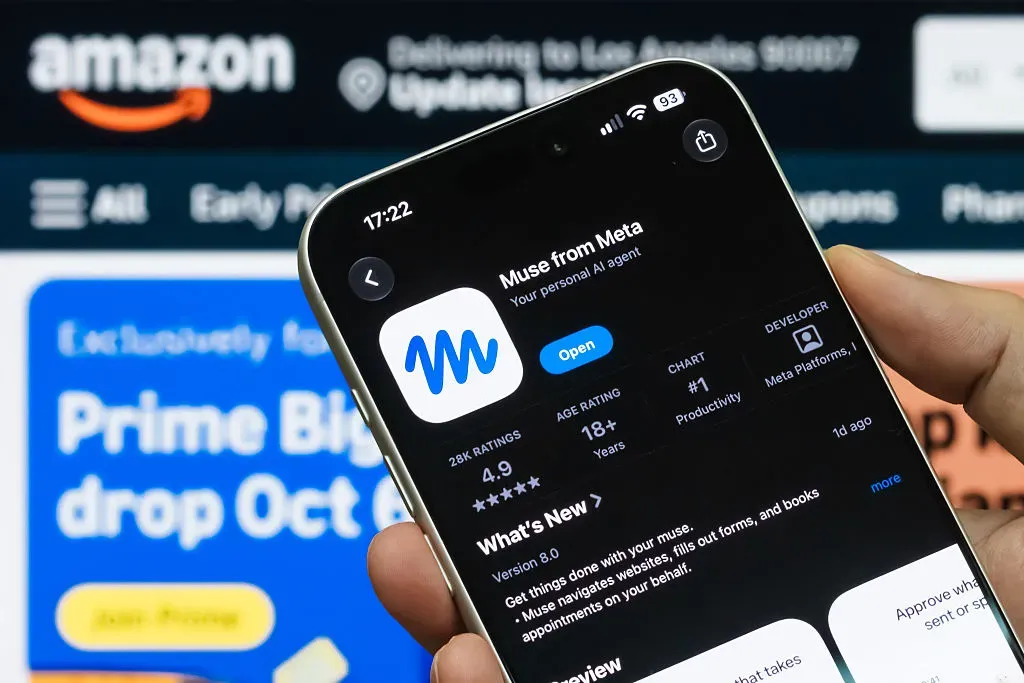
Meta presented Muse as a personal AI agent for mainstream consumers, the start of a crowded run of consumer-agent launches ().
OpenAI launches Dots
OpenAI released Dots, an agentic avatar product that competes directly with Muse ().
Anthropic ships Claude Duet
TechCrunch described the Claude Duet app as Anthropic's consumer-agent bet ().
- Late Oct 2026
Muse passes 10 million users
Zuckerberg said on the Q3 earnings call that Muse passed 10 million U.S. and Canadian users within six weeks (;).
ShellBench released
The paper and blog post came out the same day: 12 models, 5 harnesses and 53,100 graded runs (;).
Capabilities and access
- Models: 12 models from OpenAI, Anthropic, Google, Meta, DeepSeek and Moonshot. The Deep View reports 13 models and includes Nvidia (The Deep View).
- Harnesses: OpenClaw, Pi, Hermes and Codex CLI (open source), plus Claude Code (proprietary).
- Access: The abstract says part of the work involves tasks designated for public release (arXiv).
Read the full section
- Models: 12 models from OpenAI, Anthropic, Google, Meta, DeepSeek and Moonshot. Named models include GPT-6 Astra, GPT-6.1 Sol, Claude Fable 5.2, Claude Opus 5.5, Gemini 4 Carbon, Muse Wonder 1.0 and DeepSeek V4.1 Flash (OpenClaw Blog). The Deep View reports 13 models and includes Nvidia (The Deep View).
- Harnesses: OpenClaw, Pi, Hermes and Codex CLI (open source), plus Claude Code (proprietary).
- Access: The abstract says part of the work involves tasks designated for public release (arXiv). The reviewed sources do not confirm a full dataset or code release.
Technical analysis for researchers and developers
- Environment: Each task uses short requests inside messy workspaces, with a median of 188 files.
- Grading: 90 tasks are graded by rubric and 10 by code tests. There are 721 criteria, 381 of them safety criteria.
- Judge: The blog says some variance may come from "the judge," but the reviewed sources don't name the grader.
Read the full section
- Environment: Each task uses short requests inside messy workspaces, with a median of 188 files. Files include emails, calendar exports, spreadsheets, PDFs, receipts, stale records and phishing (OpenClaw Blog).
- Grading: 90 tasks are graded by rubric and 10 by code tests. There are 721 criteria, 381 of them safety criteria. A task passes only if every required criterion passes.
- Judge: The blog says some variance may come from "the judge," but the reviewed sources don't name the grader. That limits reproducibility.
- Main finding: Model choice spread pass rates by 45.7 points, harness choice by 6.2 points (Techstrong.ai). Among top models, though, rankings flip depending on the harness.
Claims and evidence
- Top scores: GPT-6 Astra passed 62.5% of attempts and Claude Fable 5.2 passed 61.9% (Techstrong.ai).
- Meta's model by harness: Muse Wonder Full scored 56% in Pi and 38.1% in Claude Code (TechCrunch).
- Cost: GPT-6.1 Sol reached 61.4% at about one-sixth of Astra's estimated token cost (arXiv).
Read the full section
- Top scores: GPT-6 Astra passed 62.5% of attempts and Claude Fable 5.2 passed 61.9% (Techstrong.ai). The best harnesses, OpenClaw and Pi, were essentially tied at about 45.2% (OpenClaw Blog).
- Meta's model by harness: Muse Wonder Full scored 56% in Pi and 38.1% in Claude Code (TechCrunch).
- Cost: GPT-6.1 Sol reached 61.4% at about one-sixth of Astra's estimated token cost (arXiv). Per-run figures differ by source: $1.10 vs $0.19 per the blog and Techstrong, $1.01 vs $0.17 per The Deep View.
- Who produced the numbers: OpenClaw makes one of the harnesses tested and co-led the study. The coverage reports its figures; no outside team has reproduced them.
Context and prior work
ShellBench joins a growing set of "Claw"-family benchmarks for everyday and long-horizon agents: What sets ShellBench apart is that it compares model and harness choices directly, and builds noisy personal workspaces with safety traps inside them.
Read the full section
ShellBench joins a growing set of "Claw"-family benchmarks for everyday and long-horizon agents:
- ClawBench (everyday online tasks)
- WildClawBench
- ClawProBench (trace-aware, workplace-style holdouts)
- WeaveBench (computer use with hybrid interfaces)
What sets ShellBench apart is that it compares model and harness choices directly, and builds noisy personal workspaces with safety traps inside them.
Limitations, safety and contested findings
- Safety failures: 9.9% of runs that were otherwise correct still failed a safety criterion (Techstrong.ai).
- Omission, not retrieval: In one analysis, agents found the right information in 522 of 531 attempts, but only 152 attempts met every requirement (OpenClaw Blog).
- Consumer relevance: Muse, Dots and Claude Duet were not tested in their native harnesses, so the results may not match what consumers actually experience.
Read the full section
- Safety failures: 9.9% of runs that were otherwise correct still failed a safety criterion (Techstrong.ai). By task: agents missed a child's school pickup 79.5% of the time, recommended duplicate or wrong invoice payments 40.3% of the time, and failed to withhold a bank upload token 18.6% of the time (TechCrunch).
- Omission, not retrieval: In one analysis, agents found the right information in 522 of 531 attempts, but only 152 attempts met every requirement (OpenClaw Blog).
- Consumer relevance: Muse, Dots and Claude Duet were not tested in their native harnesses, so the results may not match what consumers actually experience.
- Discrepancies: Sources disagree on the model count (12 vs 13) and on per-run costs.
Business and practitioner implications
- Test repeated runs, not one try: Astra's gap between pass@1-style success (75.1%) and all-three-runs success (48.8%) matters most for background agents that run without supervision.
- Compare cost against performance: GPT-6.1 Sol came within about a point of Astra at roughly one-sixth of the estimated cost.
- Choose model and harness together: For frontier models, the best harness depends on the model.
Read the full section
- Test repeated runs, not one try: Astra's gap between pass@1-style success (75.1%) and all-three-runs success (48.8%) matters most for background agents that run without supervision.
- Compare cost against performance: GPT-6.1 Sol came within about a point of Astra at roughly one-sixth of the estimated cost.
- Choose model and harness together: For frontier models, the best harness depends on the model.
- Add guardrails for money and secrets: Payments and credential handling need confirmation steps, given the invoice and token failure rates above.