
Bonds & creditYields, spreads & debt
PIMCO-sponsored Talk Your Book episode examines muni taxable-equivalent yields, prepaid gas bonds and data-center risk
Municipal bond yields have looked historically high on an after-tax basis. Florida's Amendment 3 property-tax cut, fast-growing prepaid gas bonds and early data-center financing show that muni investors need to look harder at the credit behind each bond.
From the A Wealth of Common Sense article of November 23, 2026 and cited sources: PIMCO, which sponsored the episode, put the Bloomberg Municipal Index yield-to-worst at 3.77% in April 2026. [1] [4] [6]
SOURCES[1] Talk Your Book: Stop Handing the IRS Your Yield awealthofcommonsense.com[4] PIMCO: Municipal Bond Reset pimco.com[6] PIMCO: Outlook on Municipal Bonds (2025) pimco.com
 AT Pulse research deskPublished · Updated · 5 min read · AI-assisted analysis
AI-assisted, not human-edited. Methodology Corrections Who owns this site
- What happened
- PIMCO, which sponsored the episode, put the Bloomberg Municipal Index yield-to-worst at 3.77% in April 2026. [1] [4] [6]
- Original source
- A Wealth of Common Sense article, independent perspective
- Brief by
- AT Pulse research desk AI-assisted; publisher and contact on the desk page
- When
- November 23, 2026 article published
- Covered
- Nov 24 edition
- Evidence
- 9 sources across 8 sites
- 1Talk Your Book: Stop Handing the IRS Your Yieldawealthofcommonsense.com
- 2Troutman Pepper Locke: Florida's Amendment 3 Passestroutman.com
- 3GSAM: Prepaid Gas Bondsam.gs.com
- 4PIMCO: Municipal Bond Resetpimco.com
- 5Bond Buyer: Municipal bonds won't play big role in AI…bondbuyer.com
- 6PIMCO: Outlook on Municipal Bonds (2025)pimco.com
Reach: not measured yet
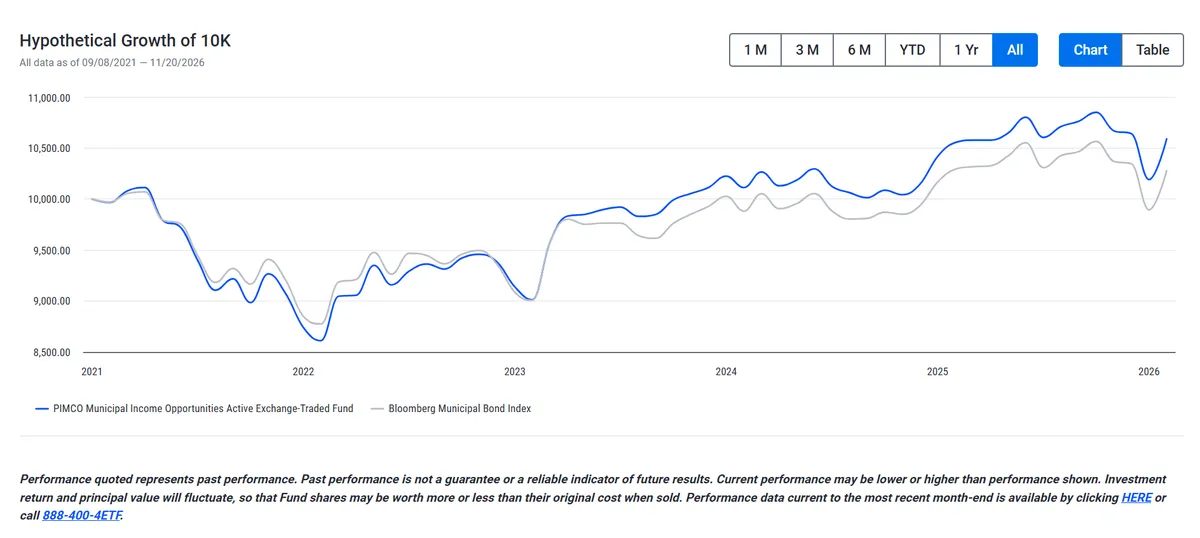
PIMCO, which sponsored the episode, put the Bloomberg Municipal Index yield-to-worst at 3.77% in April 2026. That equals about 6.38% taxable-equivalent at a 40.8% combined federal rate, and PIMCO placed it in the 93rd percentile of the past 15 years. The comparison assumes a top-bracket investor and leaves out state taxes. [1] [4] [6]
Florida's Amendment 3 raises the non-school homestead exemption to $150,000 in 2027 and $250,000 in 2028. It also halves the cap on annual non-homestead assessment increases to 5%. State estimators put the recurring revenue loss near $11.8 billion. GO pledges are unchanged, but issuers may need higher millage on a smaller tax base. Sales-tax and utility-backed debt is not directly affected. [2]
Prepaid gas bonds reached $31.4 billion in record 2025 issuance and a 5.3% weight in the Bloomberg Municipal Index. They pay more than the healthcare and transportation sectors. Their credit depends on bank and insurer guarantors and embedded commodity swaps. They make up 26% of the California Intermediate Index, so some fund holders may carry this exposure without realizing it. [3]
BlackRock expects AI-related muni issuance of up to $11 billion in 2026, under 2% of supply. That fits the episode's view that data-center politics have not yet reached munis. However, research covered by Forbes links data centers to higher borrowing costs for nearby communities, so their effect on muni pricing is unresolved. [1] [5] [8] [9]
The reviewed sources document Florida's larger exemptions, prepaid gas's 5.3% index weight and top-bracket yield math.
Read the full assessment
The implication, which is an inference, is that index-level yields can hide issuer-specific risks relevant to fund and bond selection.
Executive brief
Florida voters approved Amendment 3 on November 3, 2026. State estimators put the resulting recurring cut to local non-school property tax revenue at about $11.83 billion (Troutman Pepper Locke). Twenty days later, a PIMCO-sponsored Talk Your Book episode covered homestead changes, taxable-equivalent yields and niche municipal-bond sectors such as prepaid gas. It also argued that AI data-center politics have not yet reached the muni market (episode page). The page lists topics only. It names no guests and makes no claims that can be checked. The episode is paid content: The Compound was compensated by the sponsor.
What changed and event timeline
Prepaid gas becomes a major index sector
Goldman Sachs Asset Management reports record 2025 issuance of $31.4B, more than $100B outstanding, and a 5.3% weight in the Bloomberg Municipal Index ().
PIMCO publishes its yield case
The Bloomberg Municipal Index yield-to-worst was 3.77%, equal to 6.38% on a taxable-equivalent basis, which PIMCO placed in the 93rd percentile of the past 15 years ().
BlackRock sizes AI muni issuance
BlackRock estimates up to $11B of AI-related muni issuance in 2026, under 2% of total supply ().
Florida passes Amendment 3
The non-school homestead exemption rises to $150,000 in 2027 and $250,000 in 2028. The cap on annual non-homestead assessment increases falls from 10% to 5% ().
Episode published
The PIMCO-sponsored show covers tax-exempt versus taxable yields, Prop 13, pandemic stimulus and credit, callable bonds, prepaid gas and affordable housing ().
Capabilities and access
- Format: an audio podcast on The Compound network. The page links to the show feed and to no transcript (episode page).
- Products: the page points readers to PIMCO's ETF lineup but names no specific funds or tickers.
- Instruments discussed: tax-exempt municipal bonds, prepaid gas revenue bonds, callable bonds and affordable-housing debt.
Technical analysis for researchers and developers
- The calculation is TEY = muni yield ÷ (1 − tax rate). On that basis, 3.77% becomes about 6.38% (PIMCO).
- Credit depends on corporate guarantors such as banks and insurers. The bonds also embed commodity swaps, which add counterparty and early-termination risk (GSAM).
- General obligation (GO) mechanics under Amendment 3. The legal pledge on GO bonds stays the same.
Read the full section
- Taxable-equivalent yield. The calculation is TEY = muni yield ÷ (1 − tax rate). PIMCO uses 40.8%, which is the 37% top federal rate plus the 3.8% net investment income tax. On that basis, 3.77% becomes about 6.38% (PIMCO). The comparison assumes the top bracket and leaves out state taxes.
- Prepaid gas structure. Credit depends on corporate guarantors such as banks and insurers. The bonds also embed commodity swaps, which add counterparty and early-termination risk (GSAM).
- General obligation (GO) mechanics under Amendment 3. The legal pledge on GO bonds stays the same. Issuers may need higher millage rates applied to a smaller tax base (Troutman Pepper Locke).
Claims and evidence
- Muni yields are historically high. PIMCO puts the 3.77% yield-to-worst in the 93rd percentile (PIMCO).
- Pandemic stimulus strengthened state credit. PIMCO reported state reserves at 24% of expenditures in fiscal 2024 (PIMCO, 2025).
- Prepaid gas yields more than other sectors. It yielded 59bp more than healthcare and 77bp more than transportation in the 1–10yr index (GSAM).
Read the full section
- Muni yields are historically high. PIMCO puts the 3.77% yield-to-worst in the 93rd percentile (PIMCO). This comes from the episode's sponsor and should be read in that light.
- Pandemic stimulus strengthened state credit. PIMCO reported state reserves at 24% of expenditures in fiscal 2024 (PIMCO, 2025). PIMCO also expects 2026 issuance of $525–600B as stimulus runs off (PIMCO).
- Prepaid gas yields more than other sectors. It yielded 59bp more than healthcare and 77bp more than transportation in the 1–10yr index (GSAM).
- Callable-bond mispricing: no independent source in the reviewed material corroborates this claim.
Context and prior work
- In April 2025, after a sell-off, the index yield-to-worst reached 4.29%, or 7.24% taxable-equivalent (PIMCO, 2025).
- In September 2026 the state regulated data centers through cost-allocation and disclosure bills rather than by changing Prop 13 (KQED).
- Alphabet took part in a $1.2B prepaid energy deal in June 2026 (BlackRock).
Read the full section
- Earlier yield peak. In April 2025, after a sell-off, the index yield-to-worst reached 4.29%, or 7.24% taxable-equivalent (PIMCO, 2025).
- California's approach to data centers. In September 2026 the state regulated data centers through cost-allocation and disclosure bills rather than by changing Prop 13 (KQED).
- Hyperscalers in the muni market. Alphabet took part in a $1.2B prepaid energy deal in June 2026 (BlackRock).
Limitations, safety and contested findings
- The Compound was paid by PIMCO. The episode page carries no data, so its arguments cannot be checked against evidence.
- Data centers and muni pricing are not settled.
- Amendment 3 spending limits are unclear.
Read the full section
- Sponsored content. The Compound was paid by PIMCO. The episode page carries no data, so its arguments cannot be checked against evidence.
- Data centers and muni pricing are not settled. The episode's view that data-center politics have not reached munis fits BlackRock's estimate that AI issuance is under 2% of supply. Coverage of research cited by Forbes points the other way: it found higher borrowing costs in communities near data centers, concentrated in states without data-center incentives (Forbes).
- Amendment 3 spending limits are unclear. Courts or the legislature may need to say how the new limits apply to services such as libraries and parks (Troutman Pepper Locke).
- Prepaid gas concentration. Outstanding debt is concentrated in a limited number of issuers (GSAM).
Business and practitioner implications
- Troutman expects rating agencies to scrutinize issuers' reliance on property tax and their reserve levels.
- Prepaid gas makes up 26% of the Bloomberg California Intermediate Index, so holders of intermediate funds may carry bank-guarantor risk without realizing it (GSAM).
- BlackRock sees only a small, targeted role for munis, citing project scale and a mismatch between long bond tenors and fast-changing technology (Bond Buyer).
Read the full section
- Florida local credits. Troutman expects rating agencies to scrutinize issuers' reliance on property tax and their reserve levels. Debt backed by sales taxes or utility revenues is not directly affected (Troutman Pepper Locke).
- Index exposure. Prepaid gas makes up 26% of the Bloomberg California Intermediate Index, so holders of intermediate funds may carry bank-guarantor risk without realizing it (GSAM).
- AI infrastructure finance. BlackRock sees only a small, targeted role for munis, citing project scale and a mismatch between long bond tenors and fast-changing technology (Bond Buyer).