
ValuationsMarks, multiples & secondaries
Anjney Midha on 20VC: Nvidia after Jensen Huang's resignation, Anthropic's position and tranched VC rounds
Jensen Huang's 12 November exit from Nvidia sets up a 20VC episode with Anthropic investor Anjney Midha. It asks whether Anthropic gains most and also covers tranched funding rounds, inference-layer investing and the pressure AI puts on venture firms.
From the 20VC podcast episode of November 23, 2026 and cited sources: Huang resigned as Nvidia CEO and left the board on 12 November after reports of affairs, and CFO Colette Kress became interim CEO. [2] [7] [3]
SOURCES[2] CNBC: Nvidia CEO Jensen Huang resigns – live updates cnbc.com[7] Al Jazeera: Why did Jensen Huang resign, and who is… aljazeera.com[3] 20VC Newsletter – 23 Nov 2026 20vc.substack.com
 AT Pulse research deskPublished · Updated · 5 min read · AI-assisted analysis
AI-assisted, not human-edited. Methodology Corrections Who owns this site
- What happened
- Huang resigned as Nvidia CEO and left the board on 12 November after reports of affairs, and CFO Colette Kress became interim CEO. [2] [7] [3]
- Original source
- 20VC podcast episode, independent perspective
- Brief by
- AT Pulse research desk AI-assisted; publisher and contact on the desk page
- When
- November 23, 2026 podcast episode published
- Covered
- Nov 23 edition
- Evidence
- 12 sources across 12 sites; no transcript
- 120VC episode page (Libsyn)thetwentyminutevc.libsyn.com
- 2CNBC: Nvidia CEO Jensen Huang resigns – live updatescnbc.com
- 320VC Newsletter – 23 Nov 202620vc.substack.com
- 4The Star / NYT: Startup raises US$1.3bil for an AI 'grid'thestar.com.my
- 5Newcomer: Dual-valuation dealsnewcomer.co
- 6Fortune: Anthropic's S-1fortune.com
Reach: not measured yet
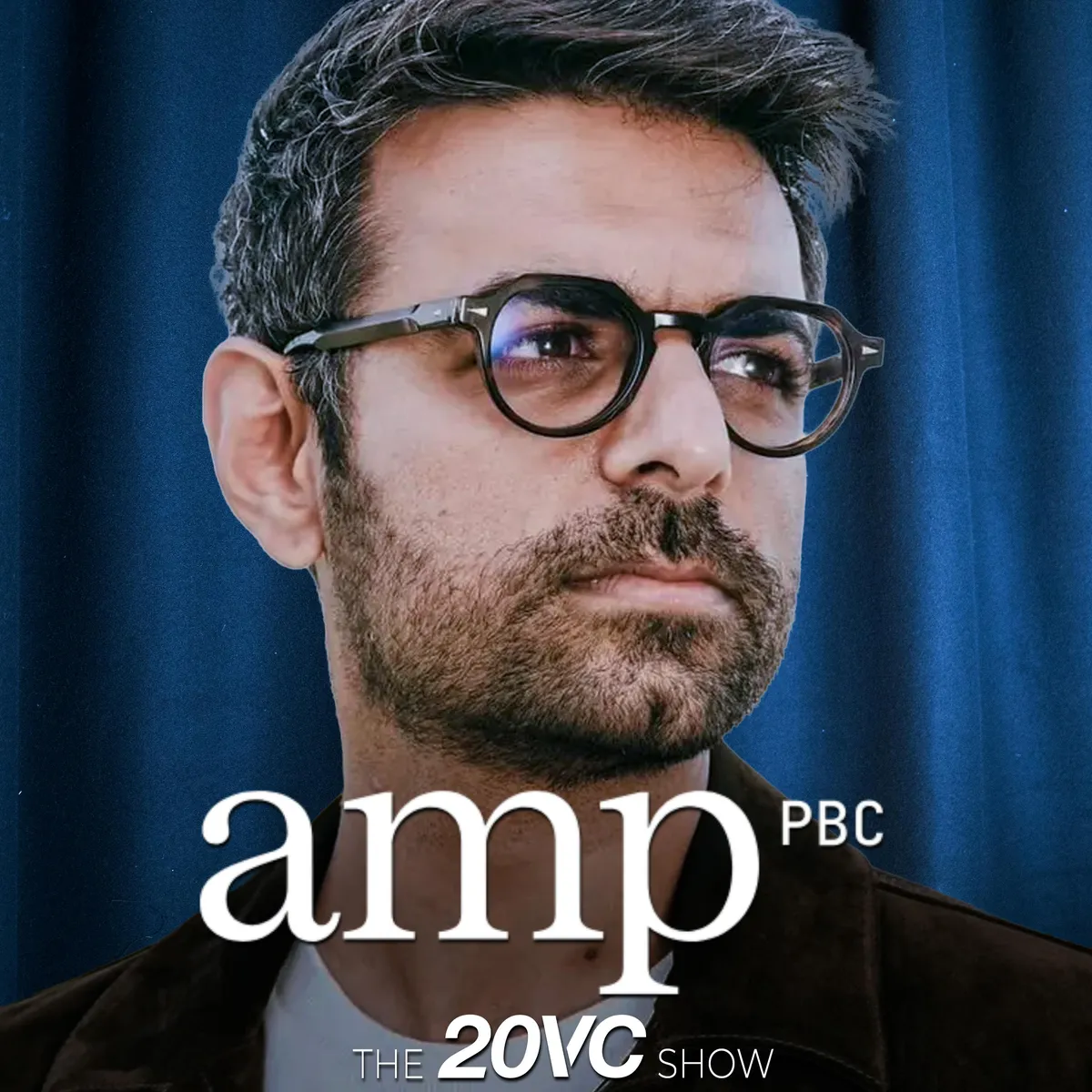
Huang resigned as Nvidia CEO and left the board on 12 November after reports of affairs, and CFO Colette Kress became interim CEO. The 20VC hosts argue that Anthropic gains most, because Huang had been pushing for a US open-weight alternative. They also say Nvidia's turmoil undercuts assumed rescues of startups such as Reflection, Poolside and Hugging Face. [2] [7] [3]
Anthropic's S-1 reports $16.3B in first-half 2026 revenue and an $80.7B net loss, mostly from accounting charges on convertible notes. About half of its revenue comes through the Amazon, Google and Microsoft marketplaces. The reported $1.5–2T valuation target does not appear in the filing. [6] [9]
Rounds that price tranches at different valuations have spread. One VC estimated that about a quarter of recent deals were structured this way, and Starcloud and Baseten were named as examples. The episode is billed as arguing that tranched rounds should be banned, so employees and LPs need to check which tranche a headline valuation reflects. [5] [12] [1]
Huang's resignation and Anthropic's S-1 figures are documented. The claim that Anthropic wins is commentary, partly from an Anthropic backer.
Read the full assessment
Investors who count on Nvidia as a backstop, and anyone reading headline tranche valuations, should revisit those assumptions.
Sources are checked; writing the dossier now.
Executive brief
Nvidia lost its founder-CEO 11 days before this episode aired. On 12 November 2026 Jensen Huang resigned as CEO and left the board, and CFO Colette Kress became interim CEO (CNBC). In this 20VC episode, early Anthropic investor Anjney Midha discusses what that means. The 20VC hosts argue Anthropic gains most, because Huang had been pushing for a US open-weight alternative (20VC Newsletter). The episode agenda also covers VC marks, tranched rounds, custom chips, neoclouds and inference platforms. Midha has a stake in the outcome: he backs Anthropic and runs AMP, a company that sells access to pooled AI compute.
What changed and event timeline
AMP raises $1.3B for a compute "grid"
The New York Times, republished by The Star, named a16z, Y Combinator and cloud providers as backers. Periodic Labs and ElevenLabs agreed to use the pool ().
Dual-valuation rounds become common
One VC estimated that about 25% of recent deals priced tranches differently within a single round. Mercor's CEO called the practice deceptive ().
Anthropic files its S-1
H1 2026 revenue was $16.3B. The $80.7B net loss came mostly from accounting charges on convertible notes. Reported target valuation is $1.5–2T ().
Huang resigns
He left after reports of affairs, including one with a person US intelligence alleges is a Chinese spy. Kress is interim CEO and Harvey Jones became board chair (;).
20VC episode with Midha airs
It is billed as "Is Anthropic the Real Winner?" The same day's newsletter argues Nvidia's turmoil weakens assumed bailouts of startups such as Reflection, Poolside and Hugging Face ().
Capabilities and access
No model is released or evaluated in this story. The S-1 is the relevant disclosure: AMP says its pool lets independent labs and universities rent training compute without building their own (The Star/NYT).
Read the full section
No model is released or evaluated in this story. The S-1 is the relevant disclosure:
- Q2 2026: $5.6B spent on compute against $11.6B in revenue (Fortune).
- Staff: 5,300 at the end of September.
- About half of revenue flows through the Amazon, Google and Microsoft marketplaces.
AMP says its pool lets independent labs and universities rent training compute without building their own (The Star/NYT).
Technical analysis for researchers and developers
- In an April 20VC interview, Midha described coordinating 1.3 GW of compute.
- In the same interview he proposed a shared proxy layer that would detect distillation attacks across Western labs.
- Training cost data. The filing does not appear to give a cost for a single training run.
Read the full section
- Compute pooling. In an April 20VC interview, Midha described coordinating 1.3 GW of compute. He argued that GPU generations (H100, GB200, Blackwell) lack interoperability standards, so older hardware gets stranded (Podcast Alpha summary).
- Distillation defence. In the same interview he proposed a shared proxy layer that would detect distillation attacks across Western labs.
- Training cost data. The S-1 puts most training compute in R&D: $9.7B in the first half of 2026 and $19.2B over nine months (sec-api analysis). The filing does not appear to give a cost for a single training run.
Claims and evidence
- Huang's resignation and Kress as interim CEO. Confirmed by the company and widely reported (CNBC).
- "Anthropic's last model cost about $10B to train." This comes from the 20VC hosts (newsletter).
- "Anthropic is the winner."
Read the full section
- Huang's resignation and Kress as interim CEO. Confirmed by the company and widely reported (CNBC). Analysts cited by Al Jazeera found no established evidence that he knowingly helped Beijing.
- "Anthropic's last model cost about $10B to train." This comes from the 20VC hosts (newsletter). No single-run figure appears in the S-1 analyses reviewed, so treat it as their inference.
- "Anthropic is the winner." This is commentary from people with stakes in the outcome: Midha is a founding Anthropic angel, and AMP has invested in Anthropic (Latent Space wiki).
- AMP's funding.
- $1.3B raised: company-announced and reported by the NYT, not confirmed by any filing (The Star/NYT).
- $100B target over five years and "more than $6B in interest": Midha's own claims on Bloomberg TV (Bloomberg Law).
- Anthropic's numbers.
- Revenue: confirmed by the S-1 filing.
- $1.5–2T valuation target: reported, not filed (Fortune).
Context and prior work
- He is a former a16z general partner and now a venture partner there.
- April 20VC interview. He said 21 of 22 VCs he introduced to Anthropic turned it down.
- Reporting has tied them to Starcloud and Baseten re-pricing within a single round (Newcomer; AI Weekly on Bloomberg).
Read the full section
- Midha's track record. He is a former a16z general partner and now a venture partner there. He led a16z's investments in Mistral and Black Forest Labs and was an early ElevenLabs angel, per the episode description.
- April 20VC interview. He said 21 of 22 VCs he introduced to Anthropic turned it down. He also argued China is pairing Huawei hardware with model distillation (Podcast Alpha).
- Tranched rounds. Reporting has tied them to Starcloud and Baseten re-pricing within a single round (Newcomer; AI Weekly on Bloomberg).
Limitations, safety and contested findings
- Disputed training-cost figures. The $10B "last model" figure conflicts with how the S-1 reports costs.
- Huang's case is still open. Congressional committees have asked him to testify before Thanksgiving (CNBC).
- The episode's agenda titles are questions. They do not show what positions Midha actually took.
Read the full section
- Disputed training-cost figures. The $10B "last model" figure conflicts with how the S-1 reports costs. It reports R&D in aggregate and projects a training-cost peak of about $30B in 2028 (sec-api).
- Huang's case is still open. Congressional committees have asked him to testify before Thanksgiving (CNBC). Al Jazeera lists possible permanent successors: Kress, Ian Buck, Tim Cook, Lisa Su and Rene Haas (Al Jazeera).
- Midha's own positions. The episode's agenda titles are questions. They do not show what positions Midha actually took.
Business and practitioner implications
- Investors who counted on Nvidia as a buyer or rescuer of last resort should take that assumption out of their downside cases (20VC Newsletter).
- Check which tranche a headline valuation actually reflects (Newcomer).
- Concentration risk runs both ways: roughly half of Anthropic's revenue comes through the three big clouds (Fortune).
Read the full section
- Nvidia-backed startups. Investors who counted on Nvidia as a buyer or rescuer of last resort should take that assumption out of their downside cases (20VC Newsletter).
- Employees and LPs. Check which tranche a headline valuation actually reflects (Newcomer).
- Anthropic customers. Concentration risk runs both ways: roughly half of Anthropic's revenue comes through the three big clouds (Fortune).
- Independent labs. Pooled-compute providers like AMP offer an alternative to hyperscalers, but AMP's capacity claims come from the company itself.