
FundingRounds, leads & terms
Defence AI startup Agon raises $70M Series A at $450M valuation, with UK Sovereign AI Fund and NSSIF co-investing
London-based Agon, founded in January 2026 and without a released product, raised a $70M Series A led by Northzone at a $450M valuation, marking the first joint direct investment by the UK Sovereign AI Fund and the National Security Strategic Investment Fund.
From the Tech.eu article of November 23, 2026 and cited sources: The UK government is now investing directly in defence AI. [1] [5] [8]
SOURCES[1] tech.eu: Agon raises $70M (23 Nov 2026) tech.eu[5] tech.eu: Sovereign AI moving at speed (17 Apr 2026) tech.eu[8] Unite.AI: Agon Raises $70M Series A unite.ai
 AT Pulse research deskPublished · Updated · 4 min read · AI-assisted analysis
AI-assisted, not human-edited. Methodology Corrections Who owns this site
- Original source
- Tech.eu article, independent perspective
- Brief by
- AT Pulse research desk AI-assisted; publisher and contact on the desk page
- When
- November 23, 2026 article published
- Covered
- Nov 23 edition
- Evidence
- 9 sources across 7 sites
- 1tech.eu: Agon raises $70M (23 Nov 2026)tech.eu
- 2Tectonic: First Look, Agon Raises $70M Series Atectonicdefense.com
- 3aiunderstanding.org: UK Sovereign AI Fund and NSSIF invest…aiunderstanding.org
- 4Tech Funding News: Agon raises $70M at $450M valuationtechfundingnews.com
- 5tech.eu: Sovereign AI moving at speed (17 Apr 2026)tech.eu
- 6TNW: Ex-Anduril founders raise $30mnthenextweb.com
Reach: not measured yet
The UK government is now investing directly in defence AI. In this round, the £500M Sovereign AI Fund and the National Security Strategic Investment Fund made their first joint direct investment. The Sovereign AI Fund began investing in April 2026, with the aim of keeping AI startups in the UK. AI Minister Kanishka Narayan commented on the deal. [1] [5] [8]
Agon has raised about $100M in roughly ten months. It came out of stealth in July 2026 with $30M in pre-seed and seed funding, and it now carries a $450M valuation. It has no public product, no named customers and no disclosed pricing, and a launch is targeted for around the end of 2026. [1] [3] [4] [6] [7]
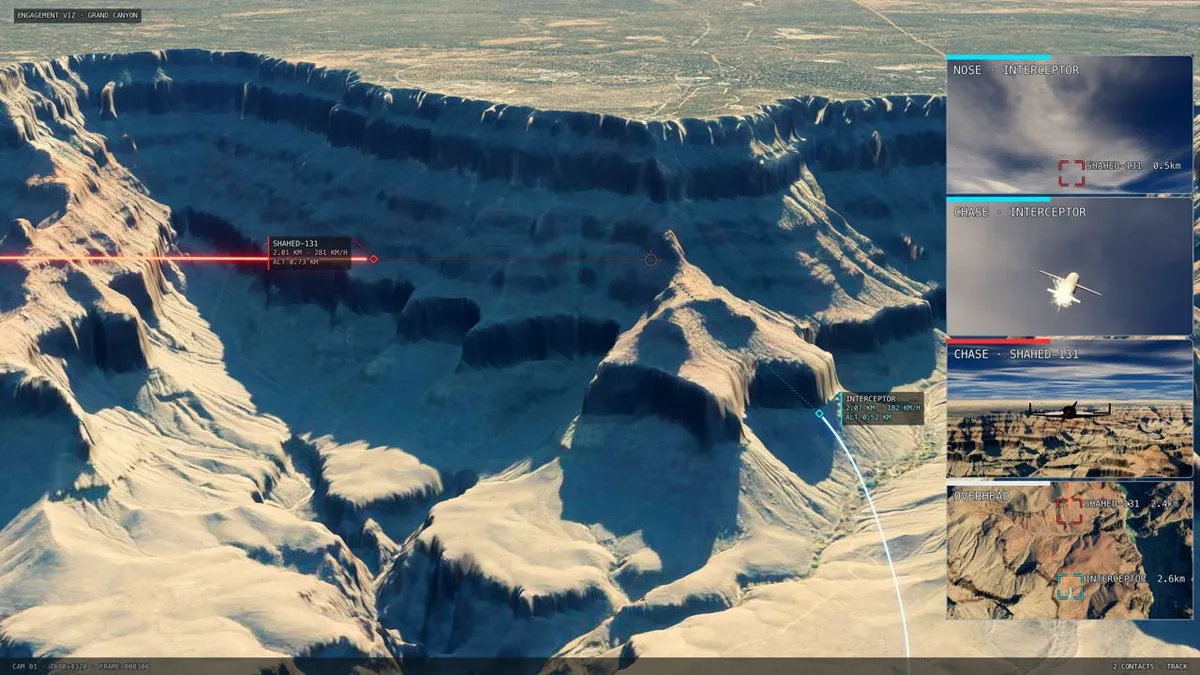
Agon is building the Agon Engine, a simulated battlefield that works like a reinforcement-learning training environment. It is meant to train autonomous drones, vessels and counter-drone systems against generated scenarios and simulated opponents, such as mass drone attacks and degraded navigation. Air defence for European and allied countries is the first focus, and each country would train systems on its own classified data. [1] [2] [3] [4] [6]
UK state funds are now backing a pre-product defence AI company directly, alongside venture investors.
Read the full assessment
Implication: other sovereign co-investments may follow, but the valuation reflects investor demand, since no product, customers or performance data are public yet.
Executive brief
Agon, a London-based defence AI startup founded in January 2026, has raised a $70M Series A at a $450M valuation. It has not yet released a product publicly. The bigger news is who invested: the UK Sovereign AI Fund and the National Security Strategic Investment Fund (NSSIF), two state-backed vehicles, made their first joint direct investment in this round (Tectonic; TFN). Agon builds simulated "synthetic battlefields" where autonomous drones and counter-drone systems train before they are deployed. The company has raised about $100M in roughly ten months. All figures come from the company, and no outside evaluation of the technology has been published.
Read the full section
Agon, a London-based defence AI startup founded in January 2026, has raised a $70M Series A at a $450M valuation. It has not yet released a product publicly. The bigger news is who invested: the UK Sovereign AI Fund and the National Security Strategic Investment Fund (NSSIF), two state-backed vehicles, made their first joint direct investment in this round (Tectonic; TFN). Northzone led. Agon builds simulated "synthetic battlefields" where autonomous drones and counter-drone systems train before they are deployed. The company has raised about $100M in roughly ten months. All figures come from the company, and no outside evaluation of the technology has been published.
What changed and event timeline
Agon founded
Tristam Constant, a former Anduril senior director and Applied Intuition's European defence lead, co-founded Agon with Junaid Hussain, who co-founded Cambridge Aerospace ().
End of 2026 (planned): first product launch
One report says no product has been released and that a launch is targeted for about a month after the raise ().
Sovereign AI Fund starts investing
The £500M UK fund announced its first deals, including Callosum, to keep AI startups in the UK ().
29–30 July 2026: Agon leaves stealth with $30M
The total was a $7M pre-seed plus a $23M seed, backed by Lakestar, Lux, Northzone and XYZ. Lakestar's Klaus Hommels joined the board (;).
Capabilities and access
- Product: the "Agon Engine," a simulated battle arena that generates training scenarios and simulated opponents for autonomous drones, vessels and robots (TFN).
- Scenarios described: mass drone attacks, operations without communications, degraded navigation and changing enemy tactics (tech.eu).
- First focus: air defence for European and allied countries (Unite.AI).
Read the full section
- Product: the "Agon Engine," a simulated battle arena that generates training scenarios and simulated opponents for autonomous drones, vessels and robots (TFN).
- Scenarios described: mass drone attacks, operations without communications, degraded navigation and changing enemy tactics (tech.eu).
- First focus: air defence for European and allied countries (Unite.AI).
- Access: not public. No version numbers, model names or pricing have been disclosed, and no customers have been named.
Technical analysis for researchers and developers
- What it does: Agon describes the engine as a reinforcement-learning-style "gym for training defence AI" (Tectonic).
- Data approach: countries would train systems on their own classified data instead of pooled datasets (TNW).
- Missing: model architecture, simulation accuracy, methods for transferring results from simulation to real hardware, benchmarks and evaluation protocols.
Read the full section
Agon has published very little technical detail.
- What it does: Agon describes the engine as a reinforcement-learning-style "gym for training defence AI" (Tectonic). It creates thousands of scenarios and simulated opponents shaped by intelligence from live conflicts (aiunderstanding.org).
- Data approach: countries would train systems on their own classified data instead of pooled datasets (TNW). The company also says it builds "AI foundation models" (tech.eu).
- Missing: model architecture, simulation accuracy, methods for transferring results from simulation to real hardware, benchmarks and evaluation protocols. None has been published, so nothing can be reproduced.
Claims and evidence
- $70M at a $450M valuation, with Northzone leading. Agon announced these figures. Several outlets repeat them consistently (tech.eu; Tectonic; TFN).
- "One of the largest European defence Series A rounds of 2026."
- First joint investment by the two UK funds. AI Minister Kanishka Narayan commented on the deal (Unite.AI).
Read the full section
- $70M at a $450M valuation, with Northzone leading. Agon announced these figures. Several outlets repeat them consistently (tech.eu; Tectonic; TFN). None of the reviewed sources confirms them through a filing, and none cites unnamed sources.
- "One of the largest European defence Series A rounds of 2026." This comes from Agon itself (tech.eu).
- First joint investment by the two UK funds. AI Minister Kanishka Narayan commented on the deal (Unite.AI). No government press release appeared in the reviewed sources.
- Partnerships with European defence companies and governments. These are self-reported, and no partner is named.
- Performance: none has been independently verified.
Context and prior work
- Comparable companies: Constant's former employers point to the model. Applied Intuition sells simulation for autonomous vehicles and defence, and Anduril builds autonomous weapons (TNW).
- Positioning: Agon says defence AI will be more specialised than general data platforms such as Scale AI (TNW).
- Team: chairman David Helgason founded the Unity game engine, which ties Agon to game-engine simulation. Staff come from Helsing, Palantir, Google and Havok (Tectonic).
Read the full section
- Comparable companies: Constant's former employers point to the model. Applied Intuition sells simulation for autonomous vehicles and defence, and Anduril builds autonomous weapons (TNW).
- Positioning: Agon says defence AI will be more specialised than general data platforms such as Scale AI (TNW).
- Team: chairman David Helgason founded the Unity game engine, which ties Agon to game-engine simulation. Staff come from Helsing, Palantir, Google and Havok (Tectonic).
Limitations, safety and contested findings
- No outside review: no third party has assessed the technology, and coverage focuses heavily on UK sovereignty (aiunderstanding.org).
- Seed figures differ: UKTN reported a $22.5M raise (UKTN), while TNW reported $7M plus $23M.
- Investor lists differ: Tectonic's list leaves out Speedinvest, which tech.eu includes.
Read the full section
- No outside review: no third party has assessed the technology, and coverage focuses heavily on UK sovereignty (aiunderstanding.org).
- Seed figures differ: UKTN reported a $22.5M raise (UKTN), while TNW reported $7M plus $23M.
- Investor lists differ: Tectonic's list leaves out Speedinvest, which tech.eu includes.
- Responsible use: the minister said such defence systems must be "reliable, trustworthy, and deployed responsibly" (Unite.AI). No safety framework for training autonomous weapons has been published.
Business and practitioner implications
- Investors: the UK government is now putting money directly into defence AI. That is a signal for other sovereign-fund co-investments.
- Valuation: $450M for a company with no released product reflects investor demand, not revenue.
- Insider investors: the lead investor and the chairman are both existing backers. Northzone led the Series A and also invested in the seed.
Read the full section
- Investors: the UK government is now putting money directly into defence AI. That is a signal for other sovereign-fund co-investments.
- Valuation: $450M for a company with no released product reflects investor demand, not revenue.
- Insider investors: the lead investor and the chairman are both existing backers. Northzone led the Series A and also invested in the seed. Helgason, Agon's chairman, increased his investment (TFN).
- Hiring: most of the money goes to AI research hiring, which adds to the competition for simulation and reinforcement-learning talent in London and Berlin.
- Buyers: defence buyers should ask for evidence that the simulations transfer to real-world performance before buying.