
ResearchPapers, evidence & method
Gukesh and Sindarov open youngest-ever world chess title match as Guardian essay asks what human play means after AI
As 20-year-olds Gukesh Dommaraju and Javokhir Sindarov prepare to open the youngest world title match in Geneva, a Guardian essay argues that losing supremacy to machines did not end chess. Instead, it turned the game into a spectator sport about human limits.
From the The Guardian · AI article of November 23, 2026 and cited sources: Stephen Marche argues that AI ended humanity's claim to be the best at chess but did not end the game. [1]
SOURCES[1] AI conquered chess. What happened next should give us hope theguardian.com
 AT Pulse research deskPublished · Updated · 5 min read · AI-assisted analysis
AI-assisted, not human-edited. Methodology Corrections Who owns this site
- What happened
- Stephen Marche argues that AI ended humanity's claim to be the best at chess but did not end the game. [1]
- Original source
- The Guardian · AI article, independent perspective
- Brief by
- AT Pulse research desk AI-assisted; publisher and contact on the desk page
- When
- November 23, 2026 article published
- Covered
- Nov 23 edition
- Evidence
- 15 sources across 15 sites
- 1AI conquered chess. What happened next should give us hopetheguardian.com
- 2Linked video: AI conquered chess. What happened next…youtube.com
- 3inkl – Young Gukesh did not use chess enginesinkl.com
- 4Al Jazeera – Gukesh vs Sindarovaljazeera.com
- 5IEEE Spectrum – How Deep Blue beat Kasparovspectrum.ieee.org
- 6DeepMind – AlphaZerodeepmind.google
RisingHow it’s measured
YouTube video · 1.2M views · 5.8K likes
Reach blends public engagement (views, likes, comments, shares, stars) from the platforms where the story or its original source lives: YouTube, Hacker News, GitHub, Substack and similar. A video and the article written from its transcript share one score, taken from the video. Platforms with no data are left out rather than counted as zero, and the age of a story never lowers its score.
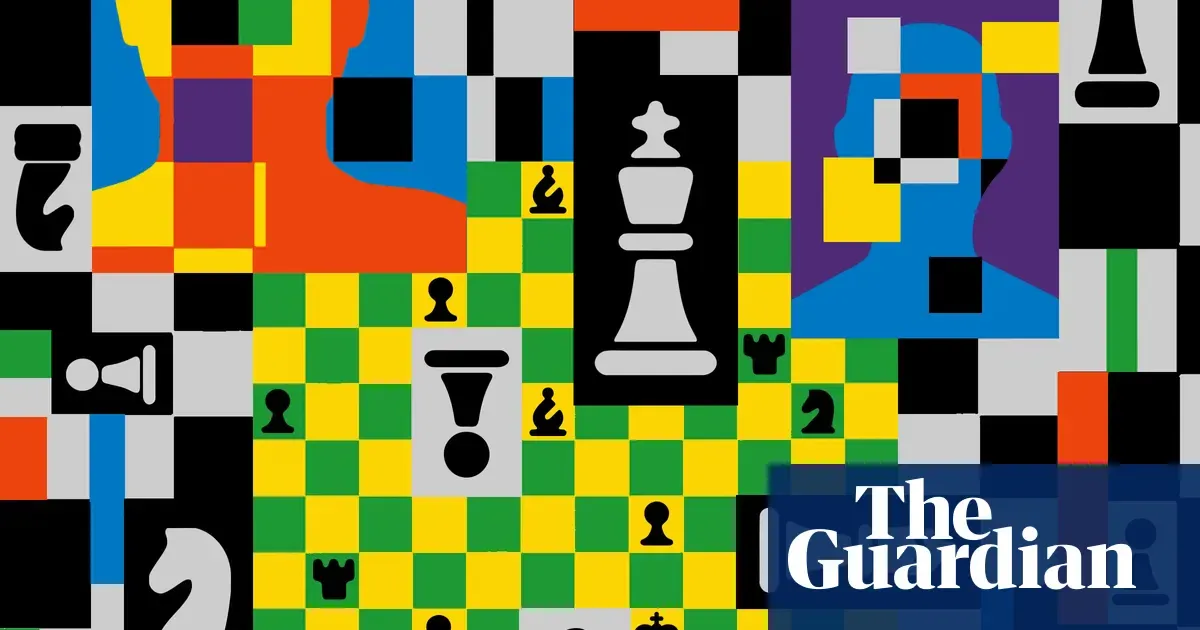
Stephen Marche argues that AI ended humanity's claim to be the best at chess but did not end the game. He says chess became a spectator sport about human limits, and that freely available engine analysis now lets any fan judge elite play. [1]
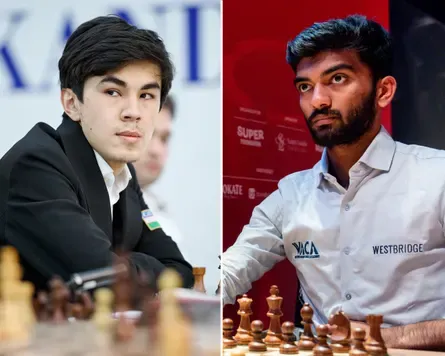
The human title still carries high stakes. Gukesh, who became the youngest undisputed champion in 2024, meets Candidates winner Sindarov in Geneva from 24 November to 12 December. The match is up to 14 classical games with a $2.5m prize fund. [4] [8] [10]
chess has continued as a high-stakes human competition decades after machines surpassed people.
Read the full assessment
Implication, not proven: in other fields, value may shift toward human performance and explanation, and teams may delay AI tools while people build core skills.
Sources are checked; the dossier follows.
Executive brief
Nearly 30 years after IBM's Deep Blue beat Garry Kasparov, the human world championship is still a major event, and its reigning champion was trained without engines for years. Gukesh Dommaraju's coach, Vishnu Prasanna, reportedly kept him off engines until he reached about 2550 Elo (inkl). In The Guardian, Stephen Marche argues that AI took away humanity's claim to be best at chess and turned it into a spectator sport about human limits. Gukesh plays Javokhir Sindarov in Geneva starting 24 November 2026. Both are 20, which makes it the youngest title match ever (Al Jazeera).
What changed and event timeline
Self-play replaces handcrafted knowledge
DeepMind's AlphaZero paper in Science describes a system that learned chess from the rules alone and beat Stockfish, winning 155 of 1,000 games and losing six ().
A champion's mental-health toll
Ding Liren told taz that exhaustion and sleeplessness led to depression and that he was treated twice in a clinic. He took about nine months away from chess ().
Gukesh takes the title
Gukesh beat Ding in Singapore at 18 and became the youngest undisputed world champion ().
Sindarov wins the Candidates
He won with a round to spare, finished on 10/14 and was the only player who didn't lose a game (). He had already won the 2025 World Cup ().
The essay, a day before game one
Marche presents the match as a test of where human intelligence fits next to machines (). The match runs 24 November to 12 December ().
Capabilities and access
- Deep Blue (1997): IBM says it evaluated 200 million positions per second (IBM). IBM retired it after the match (video 04:50).
- Today's engines: the documentary says cheap computers now play as well as Deep Blue did (05:01). Neither source names a specific engine version.
- Match format: up to 14 classical games, first to 7½ points wins, and rapid tiebreaks on 12 December if needed.
Read the full section
- Deep Blue (1997): IBM says it evaluated 200 million positions per second (IBM). IBM retired it after the match (video 04:50).
- Today's engines: the documentary says cheap computers now play as well as Deep Blue did (05:01). The Guardian essay describes engine analysis as available to any fan. Neither source names a specific engine version.
- Match format: up to 14 classical games, first to 7½ points wins, and rapid tiebreaks on 12 December if needed. The prize fund is $2.5m (Al Jazeera).
Technical analysis for researchers and developers
- Deep Blue's design: brute-force alpha-beta search on custom chess chips, plus an opening book that grandmasters helped build (video 03:43).
- What changed for 1997: a redesigned chip with better pawn evaluation roughly doubled speed over 1996 (IEEE Spectrum).
- AlphaZero: a single general reinforcement-learning algorithm trained by self-play, with no domain knowledge beyond the rules (arXiv).
Read the full section
- Deep Blue's design: brute-force alpha-beta search on custom chess chips, plus an opening book that grandmasters helped build (video 03:43). The documentary contrasts this with Kasparov's reliance on recognising patterns (03:24).
- What changed for 1997: a redesigned chip with better pawn evaluation roughly doubled speed over 1996 (IEEE Spectrum). The primary technical reference is Campbell, Hoane and Hsu, "Deep Blue", Artificial Intelligence 134 (2002) (UT Austin listing).
- AlphaZero: a single general reinforcement-learning algorithm trained by self-play, with no domain knowledge beyond the rules (arXiv).
- Lesson for training: Prasanna's stated reason for banning engines is that they give answers but not questions (inkl). That is a coaching account, not a controlled study.
Claims and evidence
- Gukesh avoided engines until about 2550 or GM level. This comes from secondary profiles that cite his coaching history (inkl; Open).
- He said this himself in the taz interview, as reported by ChessBase.
- Carlsen: "humans are not that good at playing chess." No corroboration of the exact quote was found.
Read the full section
- Gukesh avoided engines until about 2550 or GM level. This comes from secondary profiles that cite his coaching history (inkl; Open). It is one case and does not show causation.
- Ding's depression and clinic treatment. He said this himself in the taz interview, as reported by ChessBase.
- Carlsen: "humans are not that good at playing chess." The essay attributes this to a Spanish newspaper. No corroboration of the exact quote was found.
- "Chess has never been more popular." The essay backs this with influencer follower counts and the author's own experience, not audited data.
Context and prior work
The essay sets Deep Blue in a long line: von Kempelen's fake automaton, the Mechanical Turk, in the 1770s, Turing's 1948 chess algorithm, and IBM's 1996 loss to Kasparov (video 02:28). Deep Blue grew out of Hsu's ChipTest work at Carnegie Mellon and moved to IBM in 1989 (IEEE Spectrum).
Read the full section
The essay sets Deep Blue in a long line: von Kempelen's fake automaton, the Mechanical Turk, in the 1770s, Turing's 1948 chess algorithm, and IBM's 1996 loss to Kasparov (video 02:28). Deep Blue grew out of Hsu's ChipTest work at Carnegie Mellon and moved to IBM in 1989 (IEEE Spectrum). The documentary's own conclusion is that Deep Blue did not think the way a human does (05:26).
Limitations, safety and contested findings
- Date error in the essay: it says Ding beat Nepomniachtchi in 2024.
- Deep Blue's hardware is described inconsistently. The documentary says 256 processors (03:12). IEEE Spectrum says more than 500 processors and 216 accelerator chips.
- Kasparov's cheating accusation: he accused IBM of cheating, and IEEE Spectrum calls the accusation unfounded.
Read the full section
- Date error in the essay: it says Ding beat Nepomniachtchi in 2024. He won the title in 2023; the break from chess came in 2024 (ChessBase).
- Deep Blue's hardware is described inconsistently. The documentary says 256 processors (03:12). IBM says 32 processors (IBM). IEEE Spectrum says more than 500 processors and 216 accelerator chips. The 2002 paper is cited as 480 chess chips (listing).
- Kasparov's cheating accusation: he accused IBM of cheating, and IEEE Spectrum calls the accusation unfounded.
Business and practitioner implications
- Superhuman AI didn't kill the market for human performance.
- When to introduce AI tools: the Gukesh case suggests some teams may delay AI assistance while people build core reasoning skills, with the caveat above that it is one coaching account.
- Engines changed fan behaviour: with live engine evaluations, amateurs can judge elite play in real time.
Read the full section
- Superhuman AI didn't kill the market for human performance. In chess it moved the value to spectating, personalities and live events; this match alone carries a $2.5m purse.
- When to introduce AI tools: the Gukesh case suggests some teams may delay AI assistance while people build core reasoning skills, with the caveat above that it is one coaching account.
- Engines changed fan behaviour: with live engine evaluations, amateurs can judge elite play in real time. Developers of AI explainers for other domains can learn from that.
- Human welfare matters: Ding's account shows the cost of elite competition, which no amount of machine assistance removes.
The source trail.
Sources (15)
AI conquered chess. What happened next should give us hope
Article text retrieved; extracted text may omit tables or interactive elements. A transcript of the video linked from this page is supplied (linked video auto captions; https://www.youtube.com/watch?v=NJarxpYyoFI); automatic text may contain errors.
theguardian.comLinked video: AI conquered chess. What happened next should give us hope
linked video auto captions
www.youtube.com